Preface
This essay inaugurates the series “Evolution of Worship & Religion” by situating religion not as a sudden invention, but as an emergent dimension of human becoming. Before doctrine, before priesthood, before sacred texts, there existed a long developmental arc in which early humans encountered the world as both material and meaningful.
Prehistory, therefore, is not merely a background to religion - it is its generative ground. The gestures that would later become ritual, the markings that would become symbol, and the communal bonds that would become liturgy all arise within this deep, pre-literate past.
To understand religion, one must first understand the conditions under which human consciousness itself unfolded. This essay traces those conditions across the prehistoric ages, interpreting them not as static periods but as dynamic phases within a continuous process of relational becoming.
Introduction - Prehistory as the Ground of Religious Emergence

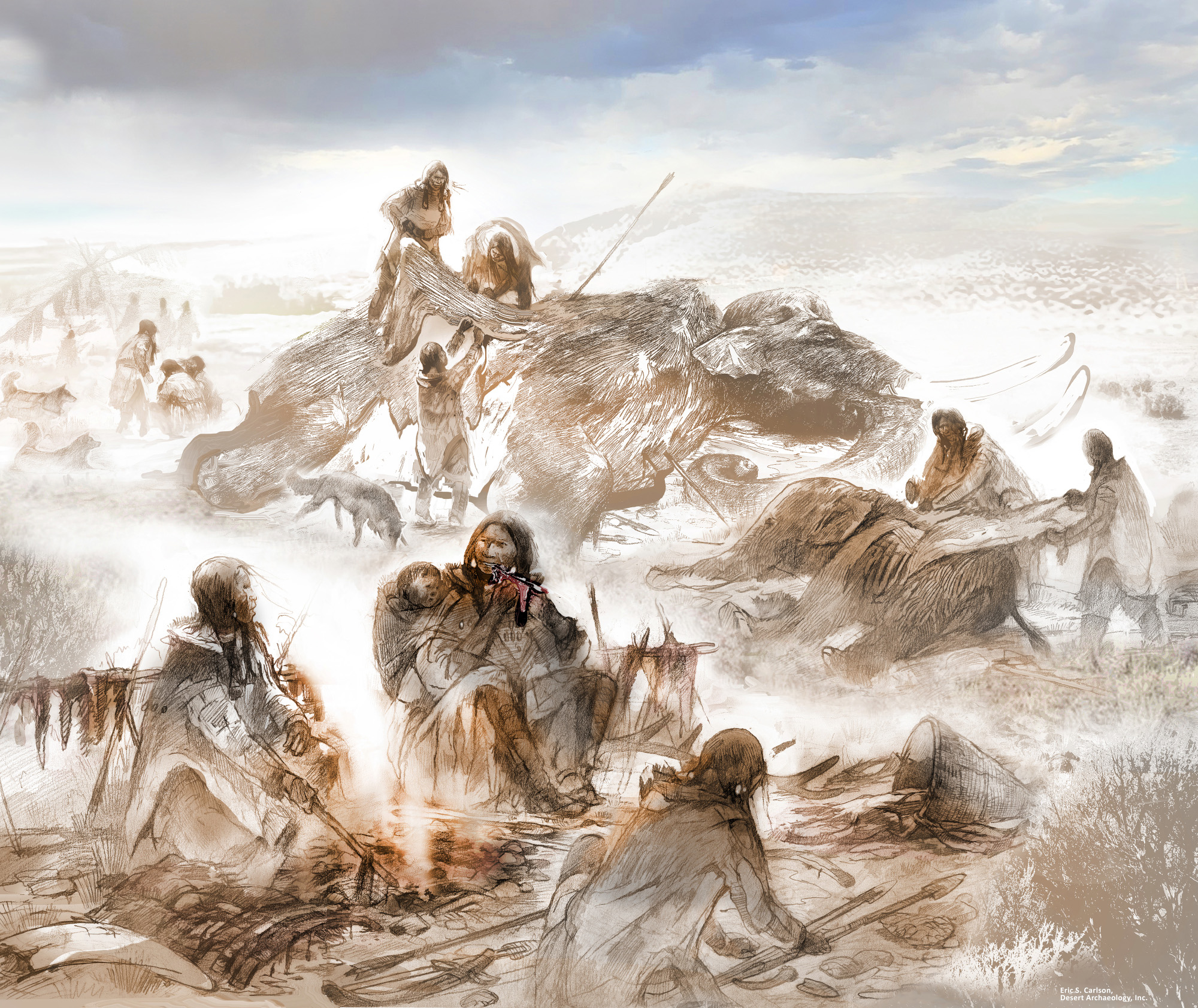

Human existence precedes written history by hundreds of thousands of years. While written records emerge only within the last five millennia, anatomically modern humans have existed for approximately 300,000 years, and earlier hominin forms extend the lineage back over 2.5 million years.
This immense span - commonly termed prehistory - is accessible not through texts but through material traces: tools, bones, pigments, settlements, and environmental modifications. These traces reveal not only survival strategies but also the gradual emergence of symbolic and relational awareness.
From a processual perspective, prehistory is best understood not as a void but as a field of becoming - a continuous unfolding in which biological, cognitive, social, and proto-religious dimensions co-evolve. Religion, in this sense, is not introduced into human life from without; it arises from within the evolving structure of human experience itself.
I. The Paleolithic Age - Survival, Symbol, and the First Sacred Gestures
The Paleolithic Age - spanning from approximately 2.5 million years ago to around 10,000 BCE - represents the longest and most formative phase of human existence. During this period, human communities lived primarily as nomadic hunter-gatherers, adapting to a wide range of ecological conditions.
Technologically, Paleolithic humans developed increasingly sophisticated stone tools, including hand axes, blades, and scrapers. The controlled use of fire marked a decisive threshold, enabling cooking, protection, and social gathering. These developments reflect not only practical ingenuity but also the emergence of cooperative social structures.
Yet the Paleolithic record reveals more than subsistence. The appearance of cave paintings, carvings, and burial practices suggests an early symbolic consciousness. Sites such as Lascaux and Chauvet indicate intentional representation of animals, movement, and possibly cosmological patterns. Burial sites, often accompanied by grave goods or red ochre, imply a recognition of death that transcends mere biological cessation.
These elements may be interpreted as proto-religious expressions - not formalized systems of belief, but embodied responses to mystery, mortality, and environment. Early humans appear to have engaged the world not only as a resource but as a presence - something to be encountered, interpreted, and perhaps revered.
From a process perspective, the Paleolithic age represents the emergence of symbolic mediation - the capacity to hold experience in forms that extend beyond immediate perception. This capacity becomes the seedbed for later myth, ritual, and theology.
II. The Mesolithic Age - Transition, Environment, and Relational Adaptation


The Mesolithic Age - roughly 14,000 to 8,000 BCE - emerges in the wake of the last (inter-glacial) Ice Age. As glaciers receded and climates stabilized, human populations adapted to increasingly diverse and localized environments.
Technological innovation during this period includes the development of microliths - small, refined stone tools often combined with wood or bone to form composite implements such as arrows and spears. Fishing technologies expanded, and many communities established seasonal or semi-permanent settlements near rivers, lakes, and coastlines.
Archaeological evidence such as shell middens reveals patterns of sustained habitation and resource management. These developments indicate a shift toward ecological attunement - a deepening relationship between human communities and specific landscapes.
Religiously or symbolically, this period likely witnessed a continuation and diversification of earlier practices. While direct evidence is limited, the increasing stability of settlement patterns suggests the possibility of localized ritual activity tied to place.
From a processual standpoint, the Mesolithic represents a phase of relational refinement. Human beings are no longer merely surviving within environments; they are learning to inhabit them with increasing sensitivity and continuity.
III. The Neolithic Age - Agriculture, Settlement, and the Structuring of Meaning

The domestication of plants and animals enabled the development of permanent settlements, leading to the formation of villages and proto-urban communities. This shift brought profound changes in social organization, including division of labor, population growth, and the accumulation of material culture.
Technological advancements include polished stone tools, pottery, weaving, and architectural construction. These developments reflect not only increased efficiency but also the emergence of aesthetic and symbolic elaboration.
Importantly, the Neolithic period provides clearer evidence of structured religious activity. Sites such as Göbekli Tepe and Çatalhöyük suggest communal ritual spaces, symbolic architecture, and possibly organized ceremonial practices. These developments indicate that religion is becoming institutionalized within communal life.
From a process perspective, the Neolithic transition represents a movement from fluid existence to structured continuity. Human beings begin to orient themselves not only in space but in time - cultivating land, storing resources, and transmitting traditions. Religion, in this context, becomes a means of stabilizing and interpreting this new temporal depth.
IV. The Bronze Age - Civilization, Order, and the Codification of the Sacred
 |
| Wikipedia - Overview map of the world at the end of the 2nd millennium BC, color-coded by cultural stage: Palaeolithic or Mesolithic hunter-gatherers nomadic pastoralists simple farming societies |
This period witnesses the rise of early civilizations, including those of Mesopotamia (Sumeria, Akkadia, Assyria, Babylonia, Hittites, Shoenicia & Sea Peoples) and Egypt (refer to timeline). With increasing social complexity come systems of governance, codified law, and stratified social hierarchies.
Crucially, the Bronze Age marks the advent of writing systems, such as cuneiform and hieroglyphics. These systems allow for the recording of economic transactions, political decrees, and religious narratives.
Religion in this period becomes increasingly formalized. Temples, priesthoods, and mythological systems emerge as central components of societal organization. The sacred is no longer only experienced in immediate relation to environment or life-cycle events; it is now mediated through institutions and texts.
From a processual lens, the Bronze Age represents the codification of meaning - the translation of lived experience into enduring symbolic systems.
V. The Iron Age - Expansion, Identity, and the Emergence of Historical Consciousness
The Iron Age - beginning around 1,200 BCE - introduces more accessible and durable metal technologies. Iron tools and weapons contribute to agricultural productivity, territorial expansion, and intensified social interaction.
Urbanization accelerates, and societies develop increasingly complex infrastructures, including roads, water systems, and fortified settlements. Writing systems evolve into alphabets, enabling broader literacy and the preservation of cultural memory.
Religiously, this period sees the further development of ethical, narrative, and theological traditions. Texts begin to reflect not only ritual practice but also moral reflection and historical interpretation.
This marks the transition from prehistory to history proper - a shift in which human communities begin to narrate their own existence within time.
From a process perspective, the Iron Age represents the emergence of self-conscious identity - the capacity of societies to understand themselves as participants within an unfolding historical narrative.
Conclusion - The Deep Roots of Religion in Human Becoming
Prehistory is not a primitive prelude to civilization; it is the matrix within which human consciousness, culture, and religion emerge.
Across the Paleolithic, Mesolithic, Neolithic, Bronze, and Iron Ages, we observe not isolated developments but a continuous process of transformation:
from survival to symbolism
from mobility to settlement
from immediacy to memory
from experience to interpretation
Religion, in this light, is not an external addition to human life. It is an emergent dimension of humanity’s ongoing effort to situate itself within a world that is at once material and meaningful.
Thus, the evolution of worship is inseparable from the evolution of humanity itself. Both arise within the same process - a process of relational becoming that continues into the present.
For Additional Referral:
The Prehistoric Ages: How Humans Lived Before Written Records, by Lesley Kennedy
Poetic Coda
Before the word, there was the mark,
before the temple - the open sky.
Hands of earth in firelight dark
asked not what - but why.
And still we walk that ancient thread,
through field and flame and frame -
A living past beneath our tread,
becoming without name.
Bibliography
Childe, V. Gordon. Man Makes Himself. London - Watts & Co., 1936.
Cunliffe, Barry. Europe Between the Oceans. New Haven - Yale University Press, 2008.
Diamond, Jared. Guns, Germs, and Steel - The Fates of Human Societies. New York - W. W. Norton, 1997.
Harari, Yuval Noah. Sapiens - A Brief History of Humankind. New York - Harper, 2015.
Hodder, Ian. Çatalhöyük - The Leopard’s Tale. London - Thames & Hudson, 2006.
Mithen, Steven. The Prehistory of the Mind. London - Thames & Hudson, 1996.
Renfrew, Colin. Prehistory - The Making of the Human Mind. New York - Modern Library, 2007.
Stringer, Chris. The Origin of Our Species. London - Allen Lane, 2011.
Tattersall, Ian. Masters of the Planet. New York - Palgrave Macmillan, 2012.
Whitehead, Alfred North. Process and Reality. New York - Free Press, 1978.


No comments:
Post a Comment