Quotes & Sayings


We, and creation itself, actualize the possibilities of the God who sustains the world, towards becoming in the world in a fuller, more deeper way. - R.E. Slater

There is urgency in coming to see the world as a web of interrelated processes of which we are integral parts, so that all of our choices and actions have [consequential effects upon] the world around us. - Process Metaphysician Alfred North Whitehead

Kurt Gödel's Incompleteness Theorem says (i) all closed systems are unprovable within themselves and, that (ii) all open systems are rightly understood as incomplete. - R.E. Slater

The most true thing about you is what God has said to you in Christ, "You are My Beloved." - Tripp Fuller

The God among us is the God who refuses to be God without us, so great is God's Love. - Tripp Fuller

According to some Christian outlooks we were made for another world. Perhaps, rather, we were made for this world to recreate, reclaim, redeem, and renew unto God's future aspiration by the power of His Spirit. - R.E. Slater

Our eschatological ethos is to love. To stand with those who are oppressed. To stand against those who are oppressing. It is that simple. Love is our only calling and Christian Hope. - R.E. Slater

Secularization theory has been massively falsified. We don't live in an age of secularity. We live in an age of explosive, pervasive religiosity... an age of religious pluralism. - Peter L. Berger

Exploring the edge of life and faith in a post-everything world. - Todd Littleton

I don't need another reason to believe, your love is all around for me to see. – Anon

Thou art our need; and in giving us more of thyself thou givest us all. - Khalil Gibran, Prayer XXIII

Be careful what you pretend to be. You become what you pretend to be. - Kurt Vonnegut

Religious beliefs, far from being primary, are often shaped and adjusted by our social goals. - Jim Forest

We become who we are by what we believe and can justify. - R.E. Slater

People, even more than things, need to be restored, renewed, revived, reclaimed, and redeemed; never throw out anyone. – Anon

Certainly, God's love has made fools of us all. - R.E. Slater

An apocalyptic Christian faith doesn't wait for Jesus to come, but for Jesus to become in our midst. - R.E. Slater

Christian belief in God begins with the cross and resurrection of Jesus, not with rational apologetics. - Eberhard Jüngel, Jürgen Moltmann

Our knowledge of God is through the 'I-Thou' encounter, not in finding God at the end of a syllogism or argument. There is a grave danger in any Christian treatment of God as an object. The God of Jesus Christ and Scripture is irreducibly subject and never made as an object, a force, a power, or a principle that can be manipulated. - Emil Brunner

“Ehyeh Asher Ehyeh” means "I will be that who I have yet to become." - God (Ex 3.14) or, conversely, “I AM who I AM Becoming.”

Our job is to love others without stopping to inquire whether or not they are worthy. - Thomas Merton

The church is God's world-changing social experiment of bringing unlikes and differents to the Eucharist/Communion table to share life with one another as a new kind of family. When this happens, we show to the world what love, justice, peace, reconciliation, and life together is designed by God to be. The church is God's show-and-tell for the world to see how God wants us to live as a blended, global, polypluralistic family united with one will, by one Lord, and baptized by one Spirit. – Anon

The cross that is planted at the heart of the history of the world cannot be uprooted. - Jacques Ellul

The Unity in whose loving presence the universe unfolds is inside each person as a call to welcome the stranger, protect animals and the earth, respect the dignity of each person, think new thoughts, and help bring about ecological civilizations. - John Cobb & Farhan A. Shah

If you board the wrong train it is of no use running along the corridors of the train in the other direction. - Dietrich Bonhoeffer

God's justice is restorative rather than punitive; His discipline is merciful rather than punishing; His power is made perfect in weakness; and His grace is sufficient for all. – Anon

Our little [biblical] systems have their day; they have their day and cease to be. They are but broken lights of Thee, and Thou, O God art more than they. - Alfred Lord Tennyson

We can’t control God; God is uncontrollable. God can’t control us; God’s love is uncontrolling! - Thomas Jay Oord

Life in perspective but always in process... as we are relational beings in process to one another, so life events are in process in relation to each event... as God is to Self, is to world, is to us... like Father, like sons and daughters, like events... life in process yet always in perspective. - R.E. Slater

To promote societal transition to sustainable ways of living and a global society founded on a shared ethical framework which includes respect and care for the community of life, ecological integrity, universal human rights, respect for diversity, economic justice, democracy, and a culture of peace. - The Earth Charter Mission Statement

Christian humanism is the belief that human freedom, individual conscience, and unencumbered rational inquiry are compatible with the practice of Christianity or even intrinsic in its doctrine. It represents a philosophical union of Christian faith and classical humanist principles. - Scott Postma

It is never wise to have a self-appointed religious institution determine a nation's moral code. The opportunities for moral compromise and failure are high; the moral codes and creeds assuredly racist, discriminatory, or subjectively and religiously defined; and the pronouncement of inhumanitarian political objectives quite predictable. - R.E. Slater

God's love must both center and define the Christian faith and all religious or human faiths seeking human and ecological balance in worlds of subtraction, harm, tragedy, and evil. - R.E. Slater

In Whitehead’s process ontology, we can think of the experiential ground of reality as an eternal pulse whereby what is objectively public in one moment becomes subjectively prehended in the next, and whereby the subject that emerges from its feelings then perishes into public expression as an object (or “superject”) aiming for novelty. There is a rhythm of Being between object and subject, not an ontological division. This rhythm powers the creative growth of the universe from one occasion of experience to the next. This is the Whiteheadian mantra: “The many become one and are increased by one.” - Matthew Segall

Without Love there is no Truth. And True Truth is always Loving. There is no dichotomy between these terms but only seamless integration. This is the premier centering focus of a Processual Theology of Love. - R.E. Slater

-----

Note: Generally I do not respond to commentary. I may read the comments but wish to reserve my time to write (or write from the comments I read). Instead, I'd like to see our community help one another and in the helping encourage and exhort each of us towards Christian love in Christ Jesus our Lord and Savior. - re slater

Showing posts with label ReImagining Our Faith. Show all posts

Sunday, February 8, 2026

Truth as Horizon, Not Property: Responding to Truth Cultures


Truth as Horizon, Not Property

On Faith, Scripture, and the Refusal of Certainty

A Public Creed for a Searching People in a Fragile Democracy

by R.E. Slater & ChatGPT

Truth is not a possession to be guarded,
but a horizon best approached together.
- R.E. Slater

Public Creed

We believe truth is approached, not owned.
That faith must remain open to correction.
That any belief justifying cruelty and oppression has failed.
That love and human dignity come before doctrine.

Preamble
These statements do not claim authority, finality, or exclusive insight. It arises from the recognition that truth cannot be possessed without distortion, and that faith and democracy alike fail when certainty is used to excuse harm. In a time when religious and ideological language is increasingly invoked to justify brutal cruelty, exclusion, dehumanization, and unaccountable power, we offer these thoughts as a public posture or set of guidelines rather than as a doctrine - one that honors searching over certainty, responsibility over obedience, and shared becoming over fortified belief.

Truth is not what we hold.
It is how we walk together.
- R.E. Slater


A Public Statement

  • We affirm that truth is approached, not owned.
  • That no institution, ideology, or tradition is exempt from correction or accountability.
  • That certainty invoked to justify cruelty has forfeited moral authority.
  • That human dignity precedes any civic or religious doctrine, policy, and power.
  • That democracy depends on humility, plural voices, and the willingness to be wrong.
  • That faith, when it is worthy of trust, remains open, revisable, and accountable to love.
  • That shared responsibility matters more than enforced conformity.
  • That dialogue, restraint, and compassion are civic and spiritual strengths, not weaknesses.
  • That no claim to truth is legitimate if it requires dehumanizing the other.


Faith is Not a Possession

One says they hold truth,
as one might hold a deed,
a barrier fence line,
at times barbed and long.

One might say they are biblical,
as though ink could finish breath,
as though God consented,
to be archived and laminated.

But truth was never a property.
It came as weather.
As fire that burned.
As a voice refusing permanence.

Moses carried it in stone that broke.
The prophets spoke of it in grief.
The psalmists and poets wrote of mercy.
The Jesus gospels spoke in parables
that God might be heard in no one way.

Truth was never so simply "handed over."
It was to be entered into experientially -
as  the burning bush and consciences alike.
To be walked on roads that came-and-went.
Whose borders were permeable and crossed.

Those claiming to own "biblical truth"
built walls around the poor and unwanted,
calling imposed cruelty obedience,
mistaking a loving faith for absolutism.

But such an abominable faith was
never the answer in God's economy.
It was to be a posture of listening.
The courage to say, "I do not know,"
and to walk together in pursuit.

We do not come to belief to arrive.
We come to search, to be corrected,
to be interrupted, to learn and listen,
to be widened by other perspectives.

To conclude this is heresy is to repeat
the heresy of Abraham leaving Ur,
of Jacob limping away from divine encounter,
of Mary consenting without clarity,
of Jesus rightly refusing lurid kingdoms.

Truth does not live in locked fortresses.
It breathes where questions are allowed,
where power is held accountable,
where love risks uncertainty.

If divinity speaks at all,
it speaks in the verbs of life -
calling, undoing, welcoming,
becoming, learning, loving.

And if democracy is to live again,
it will not be through sacred certainty,
or declared human "truths"
by human dogmas and doctrines.

But through shared searching -
together, in many voices,
in unfinished sentences,
by peoples re-learning how to listen,
without owning flat, finished answers.

Those who claim truth's possession
have learned to keep their locked doors.
But those who hold truth loosely
have unlocked their doors
to walk outside their mindscapes.


R.E. Slater
 February 8, 2026
@copyright R.E. Slater Publications
all rights reserved


Seeking, Not Possessing

We do not claim to hold truth.
We commit ourselves to seeking it.

We reject the belief that Scripture is a finished subject,
or that "objectivized faiths" grant ownership of certainty.

We receive Scripture as witness, not weapon;
as provocation, not possession;
as a living field of struggle, failure, revision, and growth.

We deny any theology that confuses certainty with faith
or obedience with moral abdication of human rights and equality.

We refuse the use of “biblical truth” as a shield against responsibility,
or as a tool of discipline,
or as a justification for imposed, immoral, cruelty.

We reject fortress faiths -
faiths that make enemies of friends,
demands purity,
sacralizes power,
or renders love optional.

We affirm that faith is not assent but orientation;
not arrival but becoming;
not certainty but responsibility.

We stand with the deeper biblical postures -
of (rabbinic) argument, lament, parable, humility, and unfinished vision.

We believe any faith worthy of the name
must remain open to correction,
be accountable to the vulnerable,
and answerable to love's remiss.

We hold that faith and democracy rise or fall together -
each requiring humility, plural voices, revisability,
and the courage to be wrong and acknowledge it.

We confess that when belief harms another,
it has already betrayed its living source.

We do not guard truth -
We walk towards it, together.


R.E. Slater
 February 8, 2026
@copyright R.E. Slater Publications
all rights reserved


Preamble

This creed does not claim authority, finality, or exclusive insight. It arises from a long recognition that truth cannot be possessed without becoming distorted, and that faith collapses when certainty is used to excuse harm. In an age when religious language is increasingly invoked to justify cruelty, exclusion, and authoritarian power, we offer this as a statement of posture rather than doctrine - one that honors searching over certainty, responsibility over obedience, and shared becoming over fortified belief.

Such a creed does not an end.
It is a refusal to close.


A Civic Statement

  • We affirm that truth is approached, not owned.
  • That no institution, ideology, or tradition is exempt from revision or accountability.
  • That certainty used to justify harm has forfeited moral authority.
  • That democracy depends on humility, plural voices, and the willingness to be wrong.
  • That human dignity precedes policy, power, and ideology.
  • That shared responsibility matters more than enforced conformity.
  • That dialogue, compassion, and restraint are civic strengths, not weaknesses.
  • That no claim to truth is legitimate if it requires dehumanizing the other.
  • That the future depends not on final answers, but on our capacity to listen, revise, and act together.


An Anti-Creed Statement (What We Refuse)

  • We refuse the claim that truth can be owned, guarded, or weaponized.
  • We refuse the use of sacred language to excuse cruelty or indifference.
  • We refuse obedience that dissolves moral responsibility.
  • We refuse faith that builds fortresses instead of communities.
  • We refuse certainty that silences dissent or punishes doubt.
  • We refuse nationalism baptized as righteousness.
  • We refuse purity tests that require enemies to survive.
  • We refuse authority that answers only to itself.
  • We refuse beliefs that demand suffering as proof of loyalty.
  • We refuse any vision of order that renders love optional.
  • We refuse the lie that arrival matters more than becoming.


Truth as Horizon, Not Property

On Faith, Scripture, and the Refusal of Certainty

1. Holding Truth vs Seeking Truth

The difference between holding truth and seeking truth is not semantic. It is postural. It determines how Scripture is read, how faith is practiced, and how power is exercised.

To claim possession of “biblical truth” is to treat Scripture as a static deposit - as something finished, to be secured, and guarded. It becomes a boundary-marker distinguishing insiders from outsiders, and a credentialed authority that legitimizes teaching, discipline, and exclusion for others to follow. Truth, in this posture, is something one arrives at, then defends, and oppresses others for not assimilating towards their perceptions.

However, to seek truth through Scripture is to enter an altogether different relationship with the Divine, the sacred, the Loving Other - where holiness and justice conform to love and not love to holiness and justice.

Scripture must become a witness rather than a weapon, a provocation rather than a possession; to be encountered as a field of struggle, failure, revision, and growth... an unfolding conversation rather than a closed system of boundary truths. Here, faith is not about guarding (religious or faith) conclusions but about remaining open to interruption.

The church’s repeated insistence that it holds “biblical truth” must be framed in humility, but too often it is more accurately a descriptor for untenable, mythic certainties masquerading as real faith. And mythic certainties do not remain benign. They harden. Calcify. And eventually become inhumanly coercive as exampled by trans-abuse, immigrant-abuse, abuse of women, and children... all in the mighty name of faith.

One never should enter Christianity in order to "arrive". But to enter within to journey, wrestle, and be undone by the divine sacred of love and love's becoming. That holy posture - of seeking rather than possessing - places it's faithful closer to the Abrahamic-Davidic-Prophetic-Jesus tradition than those who claim to guard it.


2. The Myth of “Biblical Truth” as a Finished Object

In contemporary church discourse, “biblical truth” functions less as a theological claim and more as a mechanism of control within its power centers. It serves as a rhetorical shield against critique, a disciplinary tool for enforcing conformity, and a permission structure for cruelty. Too frequently the children and women of bible-churches experience abuse and oppression in the name of "biblical truth."

It allows religious institutions such as churches, synods, denominations, and schools, to say, "We are not choosing oppression - we are merely obeying God."

But the Bible itself never behaves as a single, settled truth-system. It is argumentative rather than uniform. It revises itself across generations. It contains internal resistance and unresolved tensions. Its ethical vision advances in fits and starts. It is morally uneven and theologically self-correcting. It is a very real picture of people and societies in motion, seeking thrival and discovering brutal roadblocks to love and energy.

To claim the Bible as a "finalized truth" is to deny the Bible’s own mode of existence. Scripture does not present itself as a "closed answer" but as a living record of human struggle with God, neighbor, power, and responsibility where truth is always approached and never quite apprehended. At its height, Israel failed and crucified the living God... how much more does the church do the same thing with Jesus' love and faithfulness through high-and-holy rules and obedience sentences??

In this sense, “biblical truth,” as it is often deployed today, rests more on a mythic foundation than it does a truth foundation - not because Scripture is meaningless, but because it is too dynamically alive to be reduced to mere "era-specific or culture-oriented" certainty. The problem is not that Scripture is unstable, but that certainty demands a stillness Scripture refuses to provide, and to which "certainty faiths" always demand of themselves.


3. MAGA Christianity and Fortress Faith

MAGA Christianity represents a particularly stark example of what happens when truth is treated as property. It fuses absolutist theology with nationalist identity and fear-driven boundary enforcement. The result is not faith, but oppresive fortress-building all in the name of "purity" and "White Christian culture".

Fortress faiths always require enemies. It depends on purity tests. It thrives on spectacle. It legitimizes punishment. It needs scapegoats to sustain itself.
This is why cruelty can coexist so easily with “biblical truth” language without producing cognitive dissonance. Once truth is owned, love becomes optional. Compassion becomes negotiable. Suffering becomes collateral.

Outsiders are not wrong to connect this magafaith-posture to ICE raids, dehumanizing policy rhetoric, indifference to suffering, and the sacralization of state power. These are not accidental failures of that theology. They are its logical outcomes.

When certainty is baptized, coercion soon follows.


4. The Older, Deeper Biblical Posture

What must be articulated aligns not with today's modernized, albeit secular, faith absolutism, but with the deeper, "truer,"  biblical posture itself:

The Hebrew prophets argued with God rather than quoting Him. The wisdom tradition refused certainty and prized discernment. Jesus taught in parables precisely to prevent closure and resist final answers. Paul confessed that we see “through a glass, darkly,” acknowledging the limits of knowledge even within faith.

Across these traditions runs a consistent thread: faith is not assent - but reorientation. Not possession - but re-attunement. Not certainty - but re-acquired responsibility.

This posture cannot coexist with absolutism. One dissolves the other. The moment faith becomes fixed, it ceases to be faithful. The moment faith learns faithfulness it ceases to be fixed.


5. Re-Birthing Faith and Democracy

To link this faith critique to democracy is exactly right. Democracy MUST depend on epistemic humility, a plurality of voices, critique and revisability, and the willingness to be wrong.

It requires shared participation rather than enforced conformity. These are not weaknesses. They are the conditions of collective life.

Similarly with any faith - whether Christian, Jewish, Muslim, etc. When churches and faith groups claim to own truth, they train people to accept authoritarian certainty, moral exemption, and (often enforced) hierarchical obedience. When churches model God's love, they then place themselves in the posture of seeking truth rather than owning truth; cultivating dialogue rather than demand obedience; and willingly seek to be accountable, compassionate, shared responsibility, and grow in civic maturity with cultural and religious difference.

In summary, challenging the rhetorics of “biblical truth” is not an act of anti-faith or lost-faith; it is a very pro-God, pro-democratic, pro-human, and profoundly biblical in its deepest sense.

When true truth seeks seek loving, critiquing approaches to flat statements of "biblical truth" they are not dismantling their faith. They are removing false floors that lead to abuse and oppression. They are allowing perceived truth to breathe again as Abraham had learned with his experiences in Ur and later, with God. Seekers of true-truth are but naming the difference between faith as arrival and faith as becoming. We wish always to become the latter.


A Manifesto Against Possessed Truth

On Faith, Scripture, and Democratic Life


  1. Truth is not a possession.
    Any claim to hold truth as settled, guarded, or owned has already begun to distort it.

  2. Scripture is not a finished object.
    It is a living record of struggle, argument, revision, and moral growth.
    To freeze it is to betray it.

  3. “Biblical truth” has become a mythic device.
    It now functions less as theological insight and more as a shield against responsibility,
    a tool of discipline,
    and a permission structure for cruelty.

  4. Certainty masquerading as faith is not humility.
    It is mythic certainty—and mythic certainty always hardens into coercion.

  5. We reject obedience that dissolves moral agency.
    “We are merely obeying” is not faith.
    It is abdication.

  6. Fortress faith is not faith.
    Any belief system that requires enemies, purity tests, spectacle, punishment, or scapegoats
    has already abandoned love.

  7. Cruelty justified by sacred language is not a failure of theology.
    It is its logical outcome when truth is treated as property.

  8. The deeper biblical posture is unfinished by design.
    Prophets argued.
    Wisdom refused certainty.
    Jesus spoke in parables to prevent closure.
    Paul confessed partial sight.

  9. Faith is not assent.
    It is orientation.
    Not arrival, but becoming.
    Not certainty, but responsibility.

  10. Absolutism and faith cannot coexist.
    One dissolves the other.

  11. Democracy and faith share the same ethical soil.
    Both require humility, plural voices, revisability, and the courage to be wrong.

  12. When churches claim to own truth, they train people for authoritarianism.
    When they seek truth, they form people capable of dialogue, accountability, and care.

  13. Challenging “biblical truth” rhetoric is not anti-faith.
    It is pro-human, pro-democratic, and faithful to Scripture’s living character.

  14. We did not enter belief to arrive.
    We entered to walk, to wrestle, and to be undone.

  15. The future belongs to becoming, not certainty.
    Faith that cannot be questioned will not survive.
    Faith that refuses possession may yet endure.

Monday, November 2, 2020

Living Practical Applications of Process Thought


What is Process Thought?

by R.E. Slater
November 2, 2020

Below I have posted three articles reflecting on the practical outcomes of process thought (otherwise known as process philosophy) and how process thinking may be applied into life situations.

As a Christian, I find process thought to cross many, if not all, of the barriers of communication between humanity and with creation. If it has any reality at all then process should be found pervasively across all academic disciplines; across all structures of society; across all languages, cultures and religions; and, across our innermost core and well as God Himself. The way God is, and how God communicates, is the essence of process.


For myself, as a Christian, looking for philosophical and theological foundations on which to build, I see process thought's essence coming directly from observations of our Creator-Redeemer God who is the ground of our being and essence. All that we are, all that creation is, is very God Himself (sic, process relational panentheism).

As such, process theology builds upon process thought and philosophy to say that God's generative love and goodness is the force which impells process-driven life forward: its becoming, unfolding, emergence, and experience.


Four Characteristics of Process Being & Creation:
1 - Divine love and goodness is an embedded and driving process inhabiting all aspects of life. But it can be defeated by a freewill creation whose agency can foul up its main constitutive driving forces. 

2 - Our Creator-God has set in motion hope, promise, love, and goodness as a constitutive basis emmenating from all that He is.

3 - By God's own divine atonement and redemption (which also must be looked upon as divinely embedding processes) God's-Self has doubled down on bringing harmonious fellowship between all creation with itself and with Himself.

4 - And finally, process theology expands on these ideas by recognizing process as the fundamental driving force behind all other driving forces.


Thus and thus whether evolutionary, social, or religious processes, all are subtended in the initiating God of compelling love from whom all things flow.

For practical applications of process thinking I highlight three examples: (i) The building of ecological societies in China; (ii) the building of compassionate communities in relationship to Black Lives Matter and social justice; and, (iii) the advocacy of listening, literacy, and communication between interfaith beliefs. All three examples are due to the alignment and involvement of Jay McDaniel year's earlier into these living communities of practical process applications. Thank you Jay.

- R.E. Slater

* * * * * * * * *


Why Process Philosophy?

The Process Philosophy of Alfred North Whitehead prioritizes freedom and creativity. The system in its fully developed form is also deeply complex, and its professional discussion is weighed down with jargon. But in its simplest form, process philosophy is about engaging in the process of what we are, what we do, and how we can guide, develop and create our own future.

Events

Process emphasizes the space between two points. It's neither the start that's important, nor the end; but the travelling between. In the case of Whitehead, this travelling in between is what makes up reality. That is, Whitehead, in contrast with much philosophical - and everyday - thinking, doesn't regard 'matter' as the stuff of reality, but instead treats 'events' as the most real things that there are.

Novelty and Adventure

As a philosopher, Whitehead focused on practical matters. He recognized the barrenness of theory without practice, of education in a vacuum, of authority without responsibility, and action without purpose. His aim always was a 'creative advance', the creation and engendering of something new, something novel, something that was in a literal sense 'new under the Sun'. The past was relevant for Whitehead, but not overly so. The authorities of history were interesting, but not to be followed blindly. Experience and adventure, and the risk of the unknown: these are what drove his metaphysics.

Nothing is True

A key implication of his work is that reality doesn't have to be like 'this' or like 'that'. There's no ultimate reason why we are living in this way, in this world, in this universe. Our existence can be thought of as something like a particular rhythm set within an infinite beat, it being the rhythm that sets the tone of reality. But there is nothing to stop the establishment of new rhythms, new realities. Process philosophy is thus partly an 'aesthetic metaphysic'. What tends to succeed are those rhythms of creating which bring forth the most effective and most elegant patterns. I sometimes think of this as the Collaging of Reality.


* * * * * * * * *


R.E. Slater -
One of the areas process philosophy is being examined is in China. China has been driving forwards since the 1990's towards the idea of ecological societies in balance and in rhythm with nature.
Because of process philosophy's all encom-passing nature, it can easily serve as both foundation and driver for China's vision. The reason it can do this is because nature, planet earth, and the universe are all process mechanisms unfolding every moment in interactive, collective community with, and impact upon, one another.
Process is a cosmic (cosmos-based) mechanism on which process evolution runs. So too with all of life - including humanity. Humanity's job is to find it's balance and rhythm again with nature, synch up to it, and to each other. Such effort would be the start of discarding our biased attitudes of superiority over creation.
An attitude that uses nature only for our wants and needs rather than recognizing the biotic communities we live within with it's own wants and needs. How we each impact the other for good or for ill.
Biogenic and communal biotic process equalization is an aspect of the larger idea process philosophy identifies as essential processes humanity must learn to inhabit in compassionate communities moving through open futures filled with chaotic challenge inhabited by an agency driven creation.
As example, the Chinese civilization has enough of its old cultures left to perhaps offset the adverse affects of the Westernization of its land and peoples by moving towards the idea of process communities.
Similarly, Western civilizations should take note and begin doing the same as we face the rigors and chaos of crises from weather events to rolling pandemics to resource challenges such as  fresh water to drink, fresh air to breathe, and  fresh, unpolluted greenways to recreate and grow food (known as agricultural beltways or regional habitat zones). If not, we can expect more of the same crises as humanity remains unsynched with nature.
In summary, process-based societal living addresses how to reorientate and manage Western cultures gone unhealthily rogue in their economic and political policies, theologies of usury and theft, and practices and attitudes habituating ignorance and the blind eye to what is happening all around itself as the prime cause and motivator.


Teaching & Learning Process in China

by Jay McDaniel of Open Horizons

Teaching Whitehead in China today, with Kevin Clarke, and students from the
department of education at Harbin Normal University, all teachers-in-the-making.


Emerging Hopes in China
The Sunshine Eco-Village, Process Philosophy,
and the Resurrection of Tao Yuanming

Go to the Website for Complete Reading of Each Subtitle:

        • Why This Page? A Word from Jay McDaniel and John Cobb
        • Audio Version of Tao Yuanming's Peach Blossom Spring
        • The Sunshine International Ecovillage in Zheijian Province
        • The Resurrection of Tao Yuanming
        • Process Philosophy in Five Sentences
        • Further Reflections on Sunshine Village
        • The Way of Creative Compassion: Process Philosophy in Action
        • ​Lessons to Learn from Tao Yuanming

1. Why This Page?

A Word from Jay McDaniel

In The Ecological Era and Classical Chinese Naturalism: A Case Study of Tao Yuanming, Professor Shuyuan Lu proposes that the great Chinese nature poet, Tao Yuanming, can be "resurrected" when people reclaim their felt bonds with the more-than-human world and live accordingly. This page offers two illustrations of that resurrection: the inspirational work of the Sunshine International Eco-Village in Zhejiang Province and that of Process Philosophers in China. Along the way I explain what process thinking is for those who do not know it. Readers might also be interested in another page on this site: Open Horizons China. At the end of the page, I offers a "process" appreciation of core themes in Professor Lu's book. (Jay McDaniel)

A Word from John Cobb

​"Many of us speak generally and appreciatively of classical Chinese thought and of its potential relevance to our time and need. Some of us know that there was a great Chinese thinker by the name of Tao Yuanming whose thought was especially significant and useful to the Chinese tradition. Now Professor Lu Shuyuan has not only described that thought in nuanced detail but located it in relation to Western thinkers so as to display the value of Tao Yuanming's insights." (John B. Cobb Jr.)

​Addendum: Powerpoints for Use in
Introducing Process Thinking

Ecological Civilization and Whole Person Education:
A PPT on Process Thinking for Chinese Readers

Collecting Light:
A PPT on Process Thinking for Chinese Readers

Ecological Civilization and Whole Person Education (In Chinese)


5

Process Philosophy in Five Sentences
Process Thinking in Five Chinese Sentences

1. 一切皆在联系中,一个现实实有存在于其它现实实有之中。
 
2. 万物皆流变,流变皆有其模式。

3. 万物有情,一切生物都值得被尊重。

4. 人类是宇宙关系之中的一小部分,但是人类的使命是伟大的。即带着尊重去关心他者,特别是弱者,以及不遗余力地建设生态文明。

5.  享受生活,关爱他人,宽恕他人,身心愉悦,眼里和心底都是美

A Very Rough Paraphrase in English

1.  Everything is connected to everything else: every actual entity is present in every other actual entity even as each entity is also unique.

2.  Everything is flowing and changing, and there are patterns and rhythms within the change.

3.  Everything is filled with energy and feeling, and all living beings deserve respect and care.

4.  We humans are small but included in a larger web of life, and our mission – our great work – is to help build ecological civilizations: that is, communities that are creative, compassionate, participatory, humane to animals, in harmony with the rhythms of the earth, and spiritually satisfying, with no one left behind.
5.  Enjoy life, care for others, forgive others, be healthy in mind and body, and keep your eyes and heart on beauty.


* * * * * * * * *


R.E. Slater - 
Here is an example of process thought in action in society. One of its outcomes is the formation of compassionate communities. In this instance its support of Black communities in need of being heard socially against despair, depression, active racism, and so on. To be welcomed, embraced, wanted, enjoyed, respected, and invited. Process thought speaks to social equality, justice, equal opportunity, fair housing, food availability, and locality. This can easily be applied to poor whites, Muslim communities, Catholic-based Hispanic neighbor-hoods, transgenders, gays, and so forth. An open democracy allows all voices to be heard, recognized, and respected. This would be an example of Process in action. Such action forms the basis for an ecological society moving towards balance, harmony, and generative values.

Introduction by Jay McDaniel
of Open Horizons

An essay by Dr. Richard Rose, friend par excellence of the Cobb Institute in Claremont, CA. Influenced by Howard Thurman and active in interfaith circles, Dr. Rose is Professor of Religion and Philosophy at the University of La Verne (Ca), program director for the Ecumenical Center for Black Church Studies.

Dr. Rose is a powerful voice at the Cobb Institute. One mission of the Institute is to take the general ideas of process thought and apply them to local initiatives in southern California. The Institute focuses on "compassionate community" as an embodiment of the 'integral ecology' of which Pope Francis speaks in Laudato Si.

An integral ecology is sensitive to the cries of the Earth and the cries of the poor, neither to the exclusion of the other. It emphasizes just, loving, and harmonious relations among people and respective and compassionate relations with other forms of life, responsive to the sacramental beauty of life itself. "Ecological Civilization" is the name given to a community and society that embodies these qualities.

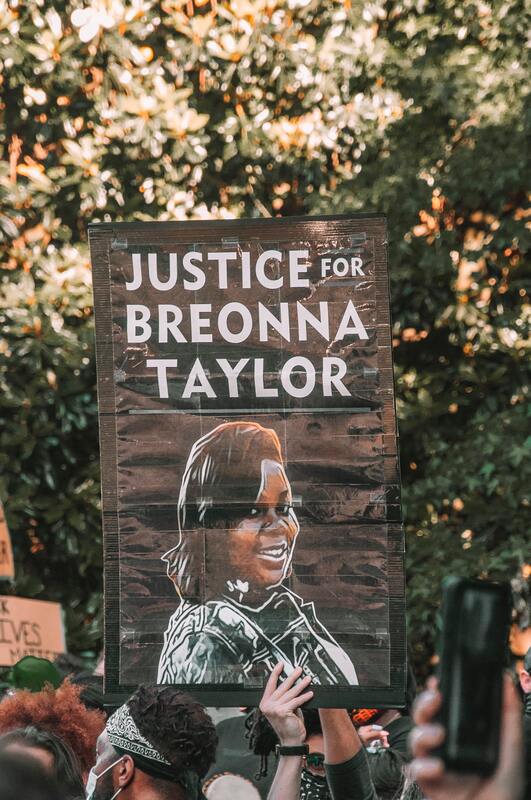
In this imaginative dialogue between Martin Luther King, Jr. and Socrates, Dr. Rose shows how no compassionate community is truly compassionate, and no Ecological Civilization is worth working toward, lest it realize, and cast its lot in, with the Black Lives Matter movement.

- Jay McDaniel


 Photo by Maria Oswalt on Unsplash | Photo by Tandem X Visuals on Unsplash

​On Black Lives Matter & Institutional Racism:
A Dialogue Between Socrates and Martin Luther King, Jr.

Dr. Richard A Rose

Dr. Rose is a Professor of Religion and Philosophy at the University of La Verne (CA)
and serves as the Program Director for the Ecumenical Center for Black Church Studies. 
SETTING: The year is 2020. Each participant is at home, comfortable in their study. The conversation takes place on Zoom.

SOC: Hello Doctor King? Glad you could dial in. Looks like there is dissatisfaction in your community these days. I have been a well-respected citizen in this area since I left Athens over 2,300 years ago and I have never seen this much discontent. Can you explain to me what’s up?

KING: Sure Socrates.. I know you are busy with your teaching of the youth, bugging city officials and everything. It is nice for you to take time off from your position of social privilege and ask about our condition. So, I’m going to be marching with these young people from BLM this Evening. Even though this march was not approved by the City officials, it is important that we make this statement against the system.

The TRUTH of the matter is that the nation is not living up to its promises and it has practices that make us feel like Lincoln has yet to pronounce the Emancipation Proclamation. 

SOC: Im afraid I’m confused. What do you mean?

KING: Give me a moment. I will be happy to explain. The Declaration of Independence states as I said at the March on Washington. “In a sense we've come to our nation's capital to cash a check. When the architects of our republic wrote the magnificent words of the Constitution and the Declaration of Independence, they were signing a promissory note to which every American was to fall heir. This note was a promise that all men - yes, black men as well as white men - would be guaranteed the unalienable rights of life, liberty and the pursuit of happiness.

It is obvious today that America has defaulted on this promissory note insofar as her citizens of color are concerned. Instead of honoring this sacred obligation, America has given the Negro people a bad check, a check which has come back marked insufficient funds.”

SOC: Sir, I must admit you put forth a strong position. Yet, there are several key ideas that it appears you did not consider prior to your response. 

KING: Pardon me?

SOC: When I had to decide whether or not I would obey the laws of Athens - the laws themselves spoke to me. Hear carefully what they said: “He who disobeys us is triply wrong: 1) in disobeying us he is disobeying his parents. 2) we are the authors of his education. 3) He has made an agreement with us that he will duly obey our commands. (204a) [“But he who has experience of the way we order justice and administer the State, and still remains, has entered into an implied contract to do as we command him.”]

So, although you have legitimate complaints the way to eradicate what you see as systematic racism, is not by marching and causing a disruption of normal life; the best way is to work within the system and change the way people are doing business. Let your little light shine, Dr. King!

KING: Socrates, you and I have much in common. You are in some ways correct, I grew up in a good home, I went to good schools, I was ordained and earned a Ph.D. degree. That is why I’m going to shine my light on you Soc. I’m doing well, however, the vast majority of my folk, especially in the inner-cities, do not have access to the same quality of EDUCATION that allows for full participation in the system. That same system, that abused them, they are then asked to obey. 

SOC: Your marching is leading to looting and even some instances of people being hospitalized and some deaths have occurred. Don’t you bear responsibility for that evil? If I had been shown how my actions, before the trial, were harmful to the larger society, I would have discontinued my behavior. Now, you are aware of your error. As a man of honor, certainly you will do the right thing.

KING: Again, Socrates, you are a man of wisdom. Yes, I try to live a life of honor and I do plan to do the right thing. However, those many years since you left Athens have left you a bit rusty. It is always right to do the right thing. In this case the “right” thing is to disobey the law; I’m not calling for violence, but I do understand the anger of some with the system.

Should, I repent of their sin? I believe my mentor Gandhi would acknowledge your concern and he would encourage me to do so. But my repentance for my brother’s anger, does not erase the original concern. Institutional Racism is still preventing us from breathing in an unobstructed way. You see how Covid-19 has impacted “all” people of color disproportionately. There are too many places where we do not have access to the rooms where decisions are being made. The result are laws and policies that are made that are not good for our community.

SOC: Ah ... yes, but can you begin to pick and choose which laws you like and don’t like? I’m confident that the city officials put a great deal of thought into each law that is on the books. You are placing yourself above the law when you and your crew decide which laws are good for you. What about the rest of society? Don’t they deserve consideration?

KING: I’m glad you asked. Of course the others in society are important when making laws that effect the whole country. There are a few necessary ideas to keep in mind when drafting laws. This is essential:

A just law is a man-made code that squares with the moral law of God. An unjust law is a code that is out of harmony with the moral law.

An unjust law is a human law that is not rooted in eternal and natural law. Any law that uplifts human personality is just. Any law that degrades human personality is unjust.

An unjust law a majority inflicts on a minority and is not binding on itself. A just law a majority compels a minority to follow and it is willing to follow itself.

SOC: So change the laws!

KING: That is what the Civil Rights Movement did. But the policies and practices remain.

SOC: So you are telling me there are practices and policies that have been in place for hundreds of years and in other cases corporate policies that affect your lives, but you do not have access to the places the decisions are made.

KING: That is correct.

SOC: And these conditions are causing hardships on workers and their families. That is a concern. And have you approached them and tried to negotiate a better arrangement, better conditions?

KING: Yes, and every time we have been misled, one excuse after another. My people are tired and frustrated. So we have a plan. We have identified our concerns and sought negotiations and have been put off. We believe our cause is just:

So, because of our commitment to justice and truth, we cannot participate in this corrupt system. So we are bringing attention to the institutional corruption in the very system that brings you, Socrates, such satisfaction.

SOC: Well, I see why they call you King. You are the type of person I would want to be King of my ideal state. I like the way you think. The Eternal Truths on which you are building your movement are impressive. Where is this March headed? I think I will join you. Maybe we can work together to get them to reconsider their behavior in the light of self-reflection.

KING: Great! We are always looking for people of outstanding character to join us. I will have a BLM T-shirt for you when you arrive, we will be honored if you will wear it.

SOC: You know I only wear this piece of cloth that looks like a Toga.

KING: Okay, no problem, I will see if I can get you a BLM mask! See you in the Streets!


* * * * * * * * *


R.E. Slater - 

If process thought is any good at all then it must be pervasive. Here's an example
of process at work spiritually crossing the boundrylands of differing faiths and religions...


Growing in Spiritual Literacy
Interfaith Center

Fall Session: Sep 30 - Dec 16
Moderated by Jay McDaniel & Sophia Said

Spiritual vision can come through art, scripture, theatre, service to the poor, meditation, dreams and countless other ways. It is how we find our own wisdom and align ourself with Spirit. Sometimes this process involves developing good judgment, deliberative skills, and common sense. Other times we may experience extraordinary perceptions, what are often called revelations. This wednesday’s (10.28.2020) spiritual letter is “V” for Vision. Our guest is Rev. Susan Sims Smith, who is the visionary and founder of two non profits, The Interfaith Center and House of Prayer in Arkansas. She will talk about three key times in her spiritual journey of service where fresh new vision upended her personal plans and brought her to places that she never imagined You can join the class by emailing us your name at theinterfaithcenter@gmail.com Jay McDaniel Sophia Said


Sunday, March 22, 2020

Is A Pandemic a God-Sent Plague or Something Else?


Theodicy (noun) 

from Greek theos, “god”; dikē, “justice”

explanation of why a perfectly good, almighty,
and all-knowing God permits evil

the vindication of God's divine goodness and providence
in view of the existence of evil.


* * * * * * * * * * * * *


Concrescence (verb)

the coalescence or growing together of parts originally separate

a relational, interactive, interconnective evolving of parts to the whole

the consequent nature of God interacting with the world, prehending fully every
single actual occasion in the world, upon its concrescence to thus preserving
the past, affect the present, and produce greater generative networks of
wellbeing and novelty

Process philosophers characterize God's relation to the world as one of
mutual transcendence, mutual immanence, and mutual creation.


* * * * * * * * * * * * *


Is A Pandemic a God-Sent Plague
or Something Else?

by R.E. Slater
March 22, 2020
rev. July 31, 2020


When it comes to plagues and disasters a church may chose the loving God approach (my preference) or, as many will do, chose the condemning God approach. One seeks restoration. The other blame. One seeks communion. The other seeks disunity and division.

If theology is any good at all then a bible centered on God's love is the more meaningful, helpful, and easily transportable path to healing and peace. Good things come out of it like forgiveness, mercy, and fellowship.

The uglier approach of surmising God as a vengeful, condemning God but creates communities i) of fear, ii) rules-based faiths and formulas for legalism, and iii) ascetic living (trying to be holy by personal or social restrictions, a set of stoicisms, a self-harming form penitence, and so forth). This kind of God-perception withholds goodness and love, excludes many of God's children for many made-up religious reasons, is always sharply critical of everything, preaches guilt and unworthiness, and justifies its gospel of fear on every occasion.

Why Do Bad Things Happen?

As to why bad things happen in this world is a question of theodicy. I've been asking it for a very long time. For myself, as well as for many others, it is the simple observation that we live in a freewill creation which God doesn't control but rather guides by partnering where He can with man and nature.

Our restless and brooding souls are not unlike the whirlwind or troubling seas. But when hearing the Lord's words of peace and goodwill we must chose either by saying "Yea, Lord, I hear you," or, "Be gone from me and let me have my own way." This is the nub of an indeterminate freewill creation and sentient life.

The Agency of a Freewill Creation
Choices, as they can be made, blending with divine guidance and goodness, where it can be made possible, lived out in a cosmos boiling with restless energy yearning for life, is often expressed in ways of unbecoming rather than in ways of nurturing becoming.
Believing God to be in control is hopeful, but it is using the wrong word. God is never in control of a freewill creation with an open, undetermined future. Yet through loving guidance He seeks a kind of control in what can better be described as a fellowship or a partnership. A fellowship which guides, allowing the fullest of creation's energy to create, imagine, and become all it can be under a fulfilling divine guidance.

A virus, illness, natural disaster, or suffering is the unfortunate result of a freewill creation exercising un-nurturing agency. Within this environment - as God can - He will deliver and guide, but when not, He will always be present with us in all of life's events in a deeply personal communion.

Does God Damn and Condemn?

In this sense then, our sins do not force God away towards condemnation and judgement as many will say. As a God who is always loving and filling life with goodness, He cannot be a God of damnation. It is our own sins which fill us with grief and feelings of cursedness, not God. This, He would take away in an instant, as we let Him, filling our lives in times of harm or in times of fullness, replacing condemnation with mercy, unforgiveness with love, feelings of hurt and harm with forbearance, wisdom, and deliverance.

More simply said, God's compassion is present with all His creation. There is nothing with may separate us from God's love. And though the bible narrates stories of judgment believed by the ancients as God-sent it would be more accurate to say that these events of suffering, hardship, ruination, disaster, were more in line with how a sin-marred creation operates. Not as acts of a loving God but as acts of agency from a creation willfully exhibiting itself.

How Does God Act in a Freewill Creation?

Once an initiating process bubbles forward it may bubble for good or bad releasing succeeding bubbles of goodness or badness. This is the essence of process theology. Through these bubbling consequences God is there throughout its process doing what He can within and without a freewill creation. This is not to speak of God as limited, but as a fully sovereign God guiding creation without coercing creation.

The easiest idea is to speak of God as determining and controlling creation. But if so, creation is not open, nor free, to become in its own way. Process thought will say that creation has an open and not determined future; and that its is not controlled by God but free to become what it was initial given in its essence... that of becoming like the image of God. That is, God poured God's Self into creation. In its bones, or DNA, is the strong yearning to exercise generative bubbles of goodness, nourishment, and wellbeing for all beings. To creative novel bubbles of relationships amid thriving continuity.

Sadly, with sin came a marring of creation. It is neither wholly good or wholly evil. But it is in need of redemptive atonement which God gave through His own sacrifice on the Cross. An atonement which has placed the path of creation back towards fellowship with its Creator. Empowering it from an old creation to a new creation.

Process theodicy does not need to defend God for the evil humanity or creation groans under. It states that any judgment type of events in life testifies to the struggle of creation to either give in to itself or to God. God is not sinful or evil. Nor is He powerless or weak. God has spawned God's Self into a process that will never end which He may have eternal fellowship with.

And like Himself it has agency. And with agency it has opportunities to move from being to becoming. From being what it is to becoming all that it might be in the image of God exhibiting deep fellowship not only with God but with itself. Between these tensions of being and becoming will be a titanic history of redemptive struggle.

Our Response in Time of Evil

We might incorrectly call these times of God's judgment but in actuality these will be times of opportunity through crisis to regain what was lost at Eden. Times of challenge to meet devastation with compassion, wisdom, mercy and love. To take loss of life, or loss of social justice, or loss of personal freedoms and rights to remake a crisis into a good thing rather than to perpetuate its evil.

In terms of today's coronavirus, to find effective vaccines, to double down on helping each other, in rebuking - or not encouraging - views of scapegoating, hatred, or slandering talk of the whys and hows and wherefores of the crisis being experienced. Of refusing lies by speaking truth. Of refusing racism by embracing the other. Of withstanding voices or churches or faiths which speak death to society by speaking life and love and wisdom.

Our responses may be like the effervescing bubbles of creativity, novelty, life-changing goodness by praying forth newer, more whole societies of healing, helping, and affecting responses. Perhaps an ecological society in place of a capitalistic or communist society with all the associative ills these have presented to the history of the world.

We may lean into the atoning sacrifice of God that His redemptive power bubbles forth new communities of healing, new ecologies of restoration, new personages of embracing multi-ethnic pluralistic cultures of strength. When such earthly "judgments" come our way we repent, we change our course in life, we mend broken fences, and lean into God even more to teach us wisdom and love.

These are times of restoration. Not loss of heart. Time of Courage. Not sobbing and worry as the lost world does. These times will want for vision. This then is our challenge... to be women and men of courage, vision, love, and healing. Go forward in God's empowering power. Raise up new generations of concrecsing beauty and imagination.

R.E. Slater
March 22, 2020
rev. July 31, 2020


PS...

The link here will graphically illustrate how traditional Christianity has
interpreted bad events through fear and judgment. I submit, there is
another way as expressed above when we change our idea of God.


* * * * * * * * * * * * *


What Is a Virus? How Does it Work?


How Viruses Work - Molecular Biology Simplified (DNA, RNA, Protein Synthesis)


Learn or review basic molecular biology to understand how viruses work with illustrations from Dr. Seheult of https://www.MedCram.com. See our first 25 videos on the novel coronavirus outbreak that started in Wuhan, China:

- Coronavirus Epidemic Update 25: Vaccine Developments, Italy's Response, and Mortality Rate Trends: https://youtu.be/UImSVhLLeGY 

- Coronavirus Epidemic Update 24: Infections in Italy, Transmissibility, COVID-19 Symptoms: https://youtu.be/UImSVhLLeGY 

- Coronavirus Epidemic Update 23: Infections in Kids & Pregnancy, South Korea, Spillover From Bats: https://youtu.be/JGhwAGiAnJo 

- Coronavirus Epidemic Update 22: Spread Without Symptoms, Cruise Quarantine, Asymptomatic Testing: https://youtu.be/OqpHvK0XADY

- Coronavirus Epidemic Update 21: Antibodies, Case Fatality, Clinical Recommendations, 2nd Infections?: https://youtu.be/9BYaywITXYk

- Coronavirus Epidemic Update 20: Misinformation Spread, Infection Severity, Cruise Ship, Origins: https://youtu.be/Ka48UZDDzLY 

- Coronavirus Epidemic Update 19: Treatment and Medication Clinical Trials: https://youtu.be/4HK9QEy1KJ8 

- Coronavirus Epidemic Update 18: Cellphone Tracking, Increase in Hospitalizations, More Sleep Tips: https://youtu.be/vE4pBkslqS4 

- Coronavirus Epidemic Update 17: Spike in Confirmed Cases, Fighting Infections with Sleep (COVID-19): https://youtu.be/wlbM6VVkVZM 

- Coronavirus Epidemic Update 16: Strengthening Your Immune Response to Viral Infections (COVID-19): https://youtu.be/qqZYEgREuZ8 

- Coronavirus Epidemic Update 15: Underreporting, Prevention, 24 Day Incubation? (COVID19) https://youtu.be/o804wu5h_ms 

- Coronavirus Epidemic Update 14: Hospital spread of infection, WHO allowed in China, N-95 masks: https://youtu.be/pDnmHu8x9C4 

- Coronavirus Epidemic Update 13: Li Wenliang, nCoV vs Influenza, Dip in Daily Cases, Spread to Canada: https://youtu.be/0UgrPgJdzp0 

- Coronavirus Epidemic Update 12: Unsupported Theories, Pneumonia, ACE2 & nCoV: https://youtu.be/GT3_A1bf9pU 

- Coronavirus Epidemic Update 11: Antiviral Drugs, Treatment Trials for nCoV (Remdesivir, Chloroquine): https://youtu.be/pfGpdFNHoqQ

- Coronavirus Epidemic Update 10: New Studies, Transmission, Spread from Wuhan, Prevention (2019-nCoV): https://youtu.be/gPwfiQgGsFo 

- Coronavirus Epidemic Update 9: Fecal-Oral Transmission, Recovery vs Death Rate: https://youtu.be/8Hjy3UfaTSc 

- Coronavirus Outbreak Update 8: Travel Ban, Spread Outside of China, Quarantine, & MRSA: https://youtu.be/GpbUoLvpdCo

- Coronavirus Epidemic Update 7: Global Health Emergency Declared, Viral Shedding: https://youtu.be/nW3xqcGidpQ

- Coronavirus Outbreak Update 6: Asymptomatic Transmission & Incubation Period: https://youtu.be/UGxgNebx1pg 

- Coronavirus Epidemic Update 5: Mortality Rate vs SARS / Influenza: https://youtu.be/MN9-UXsvPBY 

- Coronavirus outbreak, transmission, and pathophysiology: https://youtu.be/9vMXSkKLg2I

- Coronavirus symptoms, diagnosis, and treatment: https://youtu.be/UCG3xqtcL3c 

- Coronavirus Update 3: Spread, Quarantine, Projections, & Vaccine: https://youtu.be/SJBYwUtB83o 

- How Coronavirus Kills: Acute Respiratory Distress Syndrome (ARDS) & Treatment: https://youtu.be/okg7uq_HrhQ

-----------------------------------------------------------

Speaker: Roger Seheult, MD
Clinical and Exam Preparation Instructor
Board Certified in Internal Medicine, Pulmonary Disease, Critical Care, and Sleep Medicine.

MedCram.com has videos on over 60 medical topics including the 2019 novel coronavirus in china, asthma, COPD, virology, hypertension, virology, microbiology, amino acids, 2019 ncov, coronavirus California, coronavirus prevention, coronavirus misinformation, antiviral drugs, wuhan virus outbreak, 武汉 肺炎, CDC, infectious disease, corona virus updates, severe influenza infections, immune system explained. Please check out our lectures on COVID-19, MERS, SARS, infectious diseases, sleep hygiene, Wuhan coronavirus, sleep apnea, and world health organization.  

Visit our Website! https://www.MedCram.com
Facebook: https://www.facebook.com/MedCram

Produced by Kyle Allred, PA

Please Note: MedCram medical videos, medical lectures, medical illustrations, and medical animations are for medical education and exam preparation purposes, and not intended to replace recommendations by your doctor or health care provider.

#Howviruseswork #microbiology #COVID19

Caption author (English)
Jacob Preciado