Quotes & Sayings


We, and creation itself, actualize the possibilities of the God who sustains the world, towards becoming in the world in a fuller, more deeper way. - R.E. Slater

There is urgency in coming to see the world as a web of interrelated processes of which we are integral parts, so that all of our choices and actions have [consequential effects upon] the world around us. - Process Metaphysician Alfred North Whitehead

Kurt Gödel's Incompleteness Theorem says (i) all closed systems are unprovable within themselves and, that (ii) all open systems are rightly understood as incomplete. - R.E. Slater

The most true thing about you is what God has said to you in Christ, "You are My Beloved." - Tripp Fuller

The God among us is the God who refuses to be God without us, so great is God's Love. - Tripp Fuller

According to some Christian outlooks we were made for another world. Perhaps, rather, we were made for this world to recreate, reclaim, redeem, and renew unto God's future aspiration by the power of His Spirit. - R.E. Slater

Our eschatological ethos is to love. To stand with those who are oppressed. To stand against those who are oppressing. It is that simple. Love is our only calling and Christian Hope. - R.E. Slater

Secularization theory has been massively falsified. We don't live in an age of secularity. We live in an age of explosive, pervasive religiosity... an age of religious pluralism. - Peter L. Berger

Exploring the edge of life and faith in a post-everything world. - Todd Littleton

I don't need another reason to believe, your love is all around for me to see. – Anon

Thou art our need; and in giving us more of thyself thou givest us all. - Khalil Gibran, Prayer XXIII

Be careful what you pretend to be. You become what you pretend to be. - Kurt Vonnegut

Religious beliefs, far from being primary, are often shaped and adjusted by our social goals. - Jim Forest

We become who we are by what we believe and can justify. - R.E. Slater

People, even more than things, need to be restored, renewed, revived, reclaimed, and redeemed; never throw out anyone. – Anon

Certainly, God's love has made fools of us all. - R.E. Slater

An apocalyptic Christian faith doesn't wait for Jesus to come, but for Jesus to become in our midst. - R.E. Slater

Christian belief in God begins with the cross and resurrection of Jesus, not with rational apologetics. - Eberhard Jüngel, Jürgen Moltmann

Our knowledge of God is through the 'I-Thou' encounter, not in finding God at the end of a syllogism or argument. There is a grave danger in any Christian treatment of God as an object. The God of Jesus Christ and Scripture is irreducibly subject and never made as an object, a force, a power, or a principle that can be manipulated. - Emil Brunner

“Ehyeh Asher Ehyeh” means "I will be that who I have yet to become." - God (Ex 3.14) or, conversely, “I AM who I AM Becoming.”

Our job is to love others without stopping to inquire whether or not they are worthy. - Thomas Merton

The church is God's world-changing social experiment of bringing unlikes and differents to the Eucharist/Communion table to share life with one another as a new kind of family. When this happens, we show to the world what love, justice, peace, reconciliation, and life together is designed by God to be. The church is God's show-and-tell for the world to see how God wants us to live as a blended, global, polypluralistic family united with one will, by one Lord, and baptized by one Spirit. – Anon

The cross that is planted at the heart of the history of the world cannot be uprooted. - Jacques Ellul

The Unity in whose loving presence the universe unfolds is inside each person as a call to welcome the stranger, protect animals and the earth, respect the dignity of each person, think new thoughts, and help bring about ecological civilizations. - John Cobb & Farhan A. Shah

If you board the wrong train it is of no use running along the corridors of the train in the other direction. - Dietrich Bonhoeffer

God's justice is restorative rather than punitive; His discipline is merciful rather than punishing; His power is made perfect in weakness; and His grace is sufficient for all. – Anon

Our little [biblical] systems have their day; they have their day and cease to be. They are but broken lights of Thee, and Thou, O God art more than they. - Alfred Lord Tennyson

We can’t control God; God is uncontrollable. God can’t control us; God’s love is uncontrolling! - Thomas Jay Oord

Life in perspective but always in process... as we are relational beings in process to one another, so life events are in process in relation to each event... as God is to Self, is to world, is to us... like Father, like sons and daughters, like events... life in process yet always in perspective. - R.E. Slater

To promote societal transition to sustainable ways of living and a global society founded on a shared ethical framework which includes respect and care for the community of life, ecological integrity, universal human rights, respect for diversity, economic justice, democracy, and a culture of peace. - The Earth Charter Mission Statement

Christian humanism is the belief that human freedom, individual conscience, and unencumbered rational inquiry are compatible with the practice of Christianity or even intrinsic in its doctrine. It represents a philosophical union of Christian faith and classical humanist principles. - Scott Postma

It is never wise to have a self-appointed religious institution determine a nation's moral code. The opportunities for moral compromise and failure are high; the moral codes and creeds assuredly racist, discriminatory, or subjectively and religiously defined; and the pronouncement of inhumanitarian political objectives quite predictable. - R.E. Slater

God's love must both center and define the Christian faith and all religious or human faiths seeking human and ecological balance in worlds of subtraction, harm, tragedy, and evil. - R.E. Slater

In Whitehead’s process ontology, we can think of the experiential ground of reality as an eternal pulse whereby what is objectively public in one moment becomes subjectively prehended in the next, and whereby the subject that emerges from its feelings then perishes into public expression as an object (or “superject”) aiming for novelty. There is a rhythm of Being between object and subject, not an ontological division. This rhythm powers the creative growth of the universe from one occasion of experience to the next. This is the Whiteheadian mantra: “The many become one and are increased by one.” - Matthew Segall

Without Love there is no Truth. And True Truth is always Loving. There is no dichotomy between these terms but only seamless integration. This is the premier centering focus of a Processual Theology of Love. - R.E. Slater

-----

Note: Generally I do not respond to commentary. I may read the comments but wish to reserve my time to write (or write from the comments I read). Instead, I'd like to see our community help one another and in the helping encourage and exhort each of us towards Christian love in Christ Jesus our Lord and Savior. - re slater

Showing posts with label The Afterlife. Show all posts

Saturday, August 15, 2026

Near-Death Experiences and the Mystery of Consciousness


Near-Death Experiences and the Mystery of Consciousness

What Science Can Explain, What Religion Interprets,
and What We Still Do Not Know...

by R.E. Slater and ChatGPT


At the boundary between life and death,
consciousness presents us not simply with answers,
but with questions about what it means
to experience reality at all.


Essay Outline
Preface: Between Heaven and Hallucination

I. At the Boundary of Death
What near-death experiences are and why they deserve serious investigation.

II. Why Does It Feel More Real Than Reality?
Vividness, memory, emotional salience, altered time, and the extraordinary phenomenology of NDEs.

III. The Brain at the Boundary of Death
Hypoxia, ischemia, neurotransmission, electrical activity, and what neuroscience can—and cannot—currently explain.

IV. Tunnels, Lights, Life Reviews, and the Experience of Leaving the Body
Possible neurological explanations for familiar NDE phenomena without mistaking hypotheses for settled explanations.

V. Experience, Memory, and Culture
Memory reconstruction, cultural interpretation, distressing experiences, and the diversity hidden by popular NDE narratives.

VI. When Experience Becomes Evidence
Out-of-body perception, prospective testing, and the AWARE research.

VII. Why Imagine Heaven Is So Compelling
John Burke, Christian hope, bereavement, personal identity, and the enormous emotional power of NDE testimony.

VIII. When Near-Death Experience Becomes Theology
Selection bias, biblical interpretation, "heaven tourism," and the problem of using experience to validate predetermined doctrine.

IX. Consciousness and the Philosophical Question
Why neither neuroscience nor NDE testimony presently resolves the relationship between brain and consciousness.

X. Toward a Relational Understanding of Consciousness and Death
Embodiment, participation, interpretation, and the possibility of asking the question without prematurely answering it.

Conclusion: Remaining With the Question

Bibliography


Preface: Between Heaven and Hallucination

This inquiry into the afterlife experiences of the near dead began with a relatively simple question around John Burke's enormously popular titles, Imagine Heaven: Near-Death Experiences, God's Promises, and the Exhilarating Future That Awaits You, and its later companion, Imagine the God of Heaven.

The occasion for the inquiry originated from a conversation with Christian friends who enthusiasticlly spoke about Burke's books and the near-death experiences recounted within them that confirmed the Christian belief in the type of afterlife God's faithful were to inherit. Later, as I thought of their excitement, and the books themselves, I was reminded that Burke's themes belong to something larger than the work of a single author. Let me explain....

Every generation seems to produce its own popular narratives about death, heaven, and what may lie beyond ordinary human existence. This faith-behavior also seems to happen frequently around Jesus' prophesied return created within expectant church cultures issuing near-term dates and current events for God's second coming. There may be other examples of recurring Christian interest, but death, the afterlife, Christian victory over secular culture, and faith assurance, seem to be the more popular recurring themes.

As I was thinking about all of this it came to me that I've seen something like this before. During the early 2010s another similar thematic wave appeared within popular American culture. Todd Burpo's Heaven Is for Real became an extraordinary publishing success and was adapted into a major film in 2014. Very quickly thereafter, a multitude of books, testimonies, speaking tours, church discussions, and films followed. Moreover, beyond explicitly designated Christian culture, Clint Eastwood's Hereafter (2010), starring Matt Damon, reflected a wider cultural fascination with near-death experiences, communication with the dead, and the possibility that consciousness might somehow continue beyond death.

https://images.openai.com/static-rsc-4/RAGENBKxaAgEVRVXlUeP7oshodoB6SOVnwOpzjnaScRw7J-rhfaX5_f2yEz773ci1vwqUb_ooi7Lc9G_xe1ZYtcbyE8tORZHKA2H2frHp1QISez5yrpcxxuld6TDusTNgU6xMMDawLw8R6hDQkzibQww57-jq-mfNrSEuJ1bH7G1Xs0WScuyAQDSpEPjbpA7?purpose=fullsize https://images.openai.com/static-rsc-4/oDtj66dQGTcNqDB9dGTELAV9fI9YHMTzx9A5zGOY8NyUbgknDaM_BJH00gnJy5Etd__LYfMPDQszm86Cn8lfYNiX7dkWkn2-C98nWx9AbIhEa4RsuZmGauHPmpsvoh4RfMKa_pIZtgF-adknOPvQDzYrAIVCcQcVTZdozg3tJLw3sselEctP2d5DDFwdp6Xz?purpose=fullsize https://images.openai.com/static-rsc-4/0xueVCgfa5YJRo4nPf8QX7wVwv-76D3KN70xZS7i7AxhGHLM5TkpJrz2MXxds4An7tHRhiOoigie07G18axDHYBXnEp2nAN10qEHqRWcufFU5pLXvCUC9OakWva5iuLQV2_rIm-NqhF_wBik5c5umh2g-E_1FNEnh4BJ9YquSPXSMJFwaMWmzg4Mnm-23IyZ?purpose=fullsize

Hence, John Burke's Imagine Heaven, published in 2015, belongs partly within this recurring tradition, although its method is different. Rather than building its case around a single dramatic testimony, Burke had assembled numerous near-death experiences (NDE's) and compares their recurring characteristics with Christian descriptions of heaven. The cumulative effect of his descriptive writing can be extraordinarily persuasive. Individual testimony becomes collective testimony; collective testimony begins to resemble corroboration; and corroboration can begin to feel like evidence that the Christian imagination of heaven has received modern empirical confirmation.

Perhaps this explains something more about the recurring popularity of such narratives.

They do not arrive merely as claims requiring further evaluation and proof. Rather, they enter already established worlds of cultural meaning. To most, heaven means reunion with those we have lost. It means that death is not final, that personal identity persists, that suffering will be redeemed, that God remains present, and that the deepest promises of one's faith may ultimately prove true.

These are wonderful, soul-healing testimonies to the grieved and suffering, the harmed and unwanted, the wounded and forgotten. Such narratives provide to skeptical readers powerful emotional and theological reasons for wanting the stories to be true.

Which raises an uncomfortable but important epistemological question.

Religious communities, like all human communities, do not always apply the same standards of evidence to claims that confirm their existing worldview -- as they do to evidence that challenges those deeply held worldviews. A testimony affirming heaven may be received enthusiastically, while findings from evolutionary biology, archaeology, neuroscience, comparative religion, biblical history, or textual criticism may encounter considerably greater resistance when they require inherited understandings of faith to change.

This is not a uniquely Christian problem. It is a very human one. We evaluate evidence from within existing communities, identities, hopes, fears, narratives, and worlds of meaning. Evidence that reinforces those worlds is often easier to receive than evidence requiring their reconstruction.

The extra-dimensional phenomenon therefore raises a larger question than whether any particular near-death experience is authentic. It asks,

How do personal or societal experiences become interpretations, interpretations become narratives, narratives become communal convictions, and communal convictions eventually come to feel like reality itself? We have asked this question before.

We might describe this experience this way (we'll let reality be something undefined and nebulous for now... unlike what we have developed in our philosophical series on reality):

Reality → Experience → Interpretation → Narrative → Community → Reinforcement

Seen from this perspective, near-death literature becomes quite interesting for reasons extending well beyond the question of heaven. It provides a revealing illustration in how human beings construct, preserve, and sometimes defend their worlds of meaning.

But this observation cuts both ways...

Popular Christian treatments can move too readily from extraordinary experience to evidence of heaven. A person approaches death, leaves the body, encounters light or deceased relatives, experiences overwhelming love, and returns convinced that another reality exists. The testimony then becomes evidence for an afterlife, and the afterlife becomes confirmation of a particular religious understanding of reality.

Popular skeptical treatments can make an equal and opposite move. Near-death experiences are attributed to oxygen deprivation, neurotransmitter release, abnormal electrical activity, memory reconstruction, or some combination thereof. Having identified possible neurological contributors, the mystery is pronounced solved: the dying brain manufactured a hallucination.

Both approaches move too quickly.

We know considerably more about near-death experiences than we did even ten years ago. As example, they have been studied prospectively in cardiac-arrest survivors. Researchers have developed standardized methods for identifying and comparing them. Their phenomenology, memories, cultural differences, psychological consequences, and possible neurological correlates have become subjects of serious scientific investigation.

But we still do not possess a comprehensive explanation of them.

More importantly, scientific explanation and metaphysical interpretation are not the same thing.

To identify neural processes accompanying an experience does not automatically tell us everything about the ontological status of consciousness. Conversely, to have an extraordinarily vivid experience while approaching death does not demonstrate that consciousness has traveled independently of the brain or visited an objectively existing afterlife.

What follows here in this essay does not attempt to prove or disprove heaven, God, faith, or the afterlife.

It asks a more preliminary question:

What do we actually know about near-death experiences, what might reasonably explain them, and where does scientific evidence end and philosophical or theological interpretation begin?

That question eventually leads beyond near-death experiences themselves.

It leads into the still unresolved relationships among brain, consciousness,
embodiment, memory, experience, interpretation, and death.


I. At the Boundary of Death

Near-death experiences, commonly abbreviated NDEs, are distinctive subjective experiences sometimes reported by people who have survived situations involving actual or perceived proximity to death.

They have been reported following cardiac arrest, severe trauma, medical emergencies, complications of anesthesia, drowning, and other extreme physiological circumstances.

Not everyone who nearly dies reports an NDE.

Nor does every NDE contain the same elements.

Nevertheless, recurring characteristics have been documented. People may describe unusual peace, absence of pain, heightened clarity, altered perception of time, separation from the body, apparent observation of their surroundings from elsewhere, passage through darkness or a tunnel, brilliant light, deceased relatives, spiritual beings, unusual landscapes, panoramic memories or life reviews, boundaries beyond which they believe they cannot return, and profound reluctance - or sometimes a command - to return to embodied life.

Prospective cardiac-arrest studies demonstrate both the reality of these reports as psychological phenomena and their limited prevalence among survivors. In the landmark Dutch study led by cardiologist Pim van Lommel, 344 successfully resuscitated cardiac-arrest patients were interviewed; a minority reported experiences meeting the researchers' criteria for an NDE. Later prospective investigations have continued to document cognitive experiences associated with resuscitation.

This immediately establishes an important distinction.

An NDE is unquestionably an experience reported by a human being.

Whether everything apparently perceived during that experience corresponds
to an independently existing reality is another question entirely.

Experience and interpretation must therefore be distinguished from the beginning.


II. Why Does It Feel More Real Than Reality?

Perhaps the most interesting characteristic of NDE testimony is not what people report seeing.

It is how they describe the quality of consciousness itself.

Near-death experiencers frequently insist that their experience was unlike an ordinary dream. Some describe extraordinary lucidity. Colors appear unusually intense. Thought seems effortless. Time disappears or expands. Personal identity may remain intact even when bodily identity appears absent. Encounters with others may seem overwhelmingly immediate.

For some experiencers, ordinary waking existence subsequently seems less real by comparison.

That phenomenon deserves attention regardless of what one believes about an afterlife.

Research into NDE memories has found that they can possess unusually rich phenomenological characteristics. In one study, NDE memories contained substantial self-referential and emotional information and were reported with greater clarity than memories associated with coma; remarkably, they could possess more phenomenological characteristics than memories of ordinary real or imagined events.

This helps explain why simply telling an experiencer, "You hallucinated," often fails to address what actually happened psychologically.

The person is not merely remembering an image.

They may be remembering what they regard as one of the most coherent and consequential experiences of their existence.

Extreme emotional salience (something which stands out, is highly noticeable, or important relative to one's surroundings) can strengthen memory. Mortal danger profoundly reorganizes attention. Ordinary temporal processing may become disrupted. Familiar distinctions among perception, memory, imagination, bodily awareness, and self-location may become unstable.

Consciousness is already capable of generating astonishingly convincing experiential worlds. Dreams demonstrate this every night. Psychedelic states, dissociation, epilepsy, sensory deprivation, anesthesia, and neurological disorders provide additional examples.

Therefore, an experience does not have to correspond perfectly to an independently existing environment to possess extraordinary phenomenological realism.

This gives us our first important principle:

Phenomenological realism does not necessarily establish ontological realism.

But the reverse is equally important.

Calling an experience a hallucination does not explain it.

A label is not a mechanism.


III. The Brain at the Boundary of Death

The popular neurological explanation of NDEs frequently sounds something like this:

oxygen deprivation → chemical flood → electrical storm → hallucination.

There are legitimate scientific ideas contained within this account.

But the confidence with which the sequence is sometimes presented greatly exceeds the evidence.

Factually, during cardiac arrest, cerebral circulation is profoundly disrupted. Oxygen and glucose availability decline. Ordinary patterns of neural coordination deteriorate. Neurochemical conditions change dramatically.

Researchers have consequently investigated numerous possible contributors to NDE phenomenology: hypoxia and anoxia, cerebral ischemia, altered carbon dioxide levels, endogenous opioid activity, serotonergic mechanisms, glutamatergic processes, temporal-lobe activity, REM intrusion, dissociation, multisensory disturbances, and alterations in large-scale brain networks.

A prominent neuroscientific interpretation argues that recognizable components of NDEs can be understood through known brain mechanisms. Dean Mobbs and Caroline Watt, for example, proposed that several apparently paranormal characteristics have plausible neurological analogues. Their argument has itself generated criticism from researchers who believe such explanations do not account for the entire NDE phenomenon.

More recently, researchers have observed striking electrical phenomena in some dying brains. In a 2023 study of four comatose patients from whom ventilatory support was withdrawn, two demonstrated surges of gamma activity and increased connectivity, including activity involving a posterior cortical region associated with conscious processing. The sample was extremely small, and the researchers could not know whether subjective experience accompanied the activity. Nevertheless, the observations complicate the simplistic image of a brain becoming instantaneously and uniformly silent as death approaches.

This is fascinating evidence.

It is not evidence that scientists have located heaven in the brain.

Neither is it evidence that scientists have explained heaven away.

It simply tells us that the neurophysiology of dying is more dynamic process than medical descriptions sometimes suggest.


IV. Tunnels, Lights, Life Reviews, and Leaving the Body

Individual components of NDEs may have plausible neurological explanations.

Tunnel-like vision, for example, has been associated theoretically with disturbances in visual processing during reduced cerebral perfusion and oxygenation. Changes in retinal and cortical processing may contribute to narrowing visual fields or unusual experiences of brightness.

That is a plausible hypothesis.

But it is not a universal explanation of NDEs.

Not everyone reporting an NDE experiences a tunnel. Not everyone experiencing hypoxia reports an NDE. Bright lights and tunnel-like experiences can occur under circumstances unrelated to dying.

The same caution applies to life reviews.

Popular accounts sometimes describe the hippocampus of the brain as suddenly "dumping" memories while the organism itself desperately searches its past for survival information.

The brain does not store autobiographical life as a film inside a single memory bank. Autobiographical memory is distributed across extensive neural systems. Temporal-lobe phenomena and extreme stress can certainly alter memory retrieval, but the panoramic life review remains incompletely understood.

There is nevertheless something psychologically striking about many reported life reviews.

Moreover, they are often relational.

Experiencers sometimes report not merely remembering their actions but experiencing their effects upon other people. The life review becomes an experience of relationship, consequence, empathy, and participation.

Out-of-body experiences create another challenge.

Our ordinary sense of being located inside our bodies depends upon the integration of visual, vestibular, tactile, proprioceptive, and spatial information. Disrupting this integration can produce altered self-location and experiences resembling aspects of being outside the body.

This establishes something important:

Noteably, reeling located outside one's body does not itself demonstrate that consciousness actually left the body.

The more difficult question concerns reports of accurate perceptions supposedly obtained while the experiencer could not normally have perceived them beyond their unconscious body.

And here controlled research becomes especially important.


V. Experience, Memory, and Culture

Human memory is reconstructive.

We do not retrieve perfect neurological recordings of previous events. Memories are continually reconstructed and may be influenced by later conversations, expectations, emotional meaning, cultural narratives, questioning, repetition, and reinterpretation.

This becomes particularly important when dealing with experiences occurring during catastrophic medical emergencies.

A patient may experience something during cardiac arrest, awaken later, hear descriptions of the resuscitation, encounter religious or cultural interpretations, repeatedly tell the story, and gradually integrate these elements into an increasingly coherent narrative.

That possibility must be considered.

But reconstruction cannot simply be invoked as a universal dismissal.

The unusual phenomenological richness of NDE memories itself requires explanation. Research indicates that these memories can remain exceptionally vivid and possess characteristics distinguishable from ordinary imagined memories.

Culture adds another layer.

NDEs have been reported across societies and religious traditions, and there are both similarities and significant variations. Cross-cultural research therefore creates difficulties for anyone wishing to identify NDE imagery straightforwardly with a single religious cosmology. As example,

A Christian may interpret a luminous presence as Jesus.

Another person may understand a similar presence through another religious vocabulary.

Others report deceased relatives, unidentified beings, landscapes, voids, or experiences containing little recognizable religious imagery.

Several possibilities remain.

Culture may substantially construct the experience.

An underlying experience may subsequently be interpreted through culturally available symbols.

A transcendent reality, if such a reality exists, might be encountered through culturally conditioned consciousness.

Or the experiences themselves may simply be substantially different.

The evidence does not presently allow us to choose confidently among these alternatives.

And not all NDEs are beautiful.

Some are distressing. Researchers have documented frightening, empty, threatening, or "hellish" experiences as well as peaceful ones. Distressing NDE literature has identified experiences involving inversion, terrifying voids, and explicitly frightening imagery.

This matters because popular literature can inadvertently create an idealized NDE:

death → tunnel → light → unconditional love → deceased relatives → heaven.

But human experience is considerably more diverse.


VI. When Experience Becomes Evidence

Claims of perception outside the body provide perhaps the clearest opportunity to move from testimony toward experimental testing.

If someone believes consciousness actually occupied a position above the body and observed the resuscitation room, then hidden visual targets should, at least theoretically, provide a way of testing the claim.

This was one purpose of the AWARE research program.

The original AWARE study examined awareness during cardiac arrest across multiple hospitals and attempted to develop methods for testing the accuracy of visual and auditory perception. Researchers found that some survivors reported memories or awareness associated with resuscitation, although the controlled visual component did not produce robust confirmation of visual perception from an extracorporeal location.

AWARE II extended this research.

Published in 2023, the multicenter study investigated consciousness and electrophysiological activity during cardiopulmonary resuscitation. Researchers reported that some survivors described memories or perceptions suggestive of consciousness and that EEG recordings in some cases showed activity patterns potentially compatible with conscious cognitive processes during prolonged CPR.

This finding deserves careful attention.

But it does not demonstrate that consciousness survives irreversible biological death.

Cardiac arrest is not equivalent to irreversible death. Resuscitation occurs during a dynamic physiological process in which circulation and brain function may be severely compromised while medical intervention attempts to restore them.

Near-death experiences are therefore exactly what the term says:

near-death experiences.

They are not reports obtained from people who remained irreversibly dead.

The AWARE research makes simplistic claims that meaningful cognitive activity is impossible during cardiac arrest increasingly difficult to sustain.

It has not established that a disembodied consciousness travels through an independently existing afterlife.

Both statements can be true simultaneously.


VII. Why Imagine Heaven Is So Compelling

This brings us back to author John Burke. Imagine Heaven is powerful because Burke does something scientific papers cannot - and do not attempt to - do.

He tells stories.

And those stories address some of the oldest human questions.

Will I continue to exist?

Will I remain myself?

Will I recognize the people I love?

Will I see my parents again?

My spouse?

My children?

What happens to those who suffer?

Does death hurt?

Will I be alone?

Is God loving?

Did my life matter?

NDE testimony gives these questions narrative embodiment.

A theological proposition becomes a human voice saying:

I died. I experienced something. I encountered overwhelming love. I remained myself. And I came back.

For grieving or frightened people, the emotional power is enormous.

Burke then adds another interpretive layer. He places contemporary NDE narratives alongside Christian biblical imagery. When he did, then -

Ancient promise and modern testimony appear to converge.

Heaven ceases to be solely an article of faith.

It begins to look like something for which witnesses have returned.

This helps explain the extraordinary popular attraction of Imagine Heaven.

Hope begins to feel more like evidence.

And precisely because that transformation is so psychologically powerful, it requires careful scrutiny.


VIII. When Near-Death Experience Becomes Theology

Burke's fundamental problem is not that he takes NDEs seriously. They should be taken seriously. The difficulty arises when selected testimony is asked to carry more evidential and theological weight than it can sustain.

Burke is not conducting a prospective controlled clinical study. He is collecting and interpreting testimony through a Christian theological framework. Several questions consequently become unavoidable.

Which stories are included?

Which are excluded?

How representative are they?

How are contradictory experiences treated?

When does an unidentified luminous presence become Christ?

When does an extraordinary landscape become the biblical heaven?

When does similarity become confirmation?

These questions reveal a danger of both author and reader confirmation bias.

If experiences resembling one's theology are treated as evidence for that theology while experiences contradicting it are dismissed, reinterpreted, or ignored, the argument becomes circular.

There is an additional irony.

NDE testimony does not always fit comfortably within traditional evangelical Christianity.

Many accounts emphasize unconditional love, interconnectedness, acceptance, compassion, relational consequence, and transformation rather than doctrinal correctness.

If NDE testimony were granted genuine revelatory authority, some of it might challenge conventional Christian doctrines as readily as other accounts appear to confirm them.

One cannot consistently maintain:

NDEs are trustworthy when they confirm my theology

but unreliable when they contradict it.

The Bible itself further complicates the matter.

Biblical understandings of death and afterlife are historically diverse. They include Sheol, resurrection, judgment, paradise, kingdom, heaven and earth, new creation, and richly symbolic apocalyptic imagery. These concepts developed within different historical settings and cannot responsibly be flattened into a single modern travel guide to heaven.

Consequently, placing contemporary NDE descriptions beside isolated biblical passages and declaring correspondence can create an illusion of precision that neither the biblical texts nor NDE research warrants.

This does not invalidate Christian hope.

It simply distinguishes hope from demonstration.


IX. Consciousness and the Philosophical Question

Eventually every serious investigation of NDEs reaches a question science has not yet resolved:

What is consciousness?

If consciousness is wholly produced by neural activity, then near-death experiences presumably arise from unusual activity within a severely compromised but still functioning nervous system.

If consciousness cannot ultimately be reduced to neural activity, other possibilities remain philosophically open.

But NDE research cannot simply assume either conclusion. Which exposes a philosophical error frequently committed on both sides.

The skeptic argues:

Brain activity accompanies the experience; therefore the brain created the experience; therefore there is no afterlife.

The believer argues:

The brain was severely compromised while experience continued; therefore consciousness must have left the brain; therefore there is an afterlife.

Neither conclusion follows necessarily from the available evidence.

Neural dependence is extraordinarily well established. Alter the brain and consciousness changes. Anesthesia alters consciousness. Brain injury can alter personality. Dementia can alter memory and identity. Psychoactive substances can transform perception. Electrical stimulation can produce unusual experiences.

Any philosophy of consciousness that ignores these facts is inadequate.

But dependence and identity are not automatically synonymous.

Discovering that consciousness is profoundly dependent upon embodied neural organization does not, by itself, solve the metaphysical question of what consciousness ultimately is.

And here near-death experience becomes part of a much larger philosophical problem.


X. Toward a Relational Understanding of Consciousness and Death

A relational philosophy suggests another way of approaching the problem.

Instead of beginning with the binary:

Does the brain manufacture consciousness?

versus

Can consciousness escape the brain?

we might ask:

What kind of relationship exists among consciousness, embodiment, environment, memory, identity, and participation?

Why?

Because human consciousness is profoundly embodied.

The brain does not exist independently of a body. The body does not exist independently of an environment. Memory develops through experience. Identity develops through relationship. Consciousness participates in a world before it interprets that world.

From this perspective, consciousness need not be imagined either as a substance secreted by neurons or as an immaterial ghost temporarily inhabiting a biological machine.

Consciousness may instead be approached as an extraordinarily complex form of relational organization through which responsiveness, experience, memory, interpretation, selfhood, and participation become possible.

Under catastrophic physiological conditions, that organization changes radically.

Ordinary sensory integration breaks down.

Temporal organization changes.

Bodily self-location may destabilize.

Memory may behave unusually.

The normal boundaries through which consciousness organizes its world may become radically altered.

A near-death experience may therefore represent an extraordinary boundary condition of embodied consciousness.

That formulation deliberately explains neither heaven nor hallucination. It identifies the phenomenon requiring explanation. And it suggests another important sequence:

Reality → Experience → Interpretation

Reality occurs. Living beings participate within it. Conscious beings experience aspects of that participation. Human beings interpret their experiences. Those interpretations become memories, narratives, philosophies, religions, scientific hypotheses, and cultural worlds.

The error occurs when these levels collapse into one another.

Burke can move too rapidly from:

experience → Christian interpretation → ontological reality.

The reductive skeptic can perform the mirror image:

neural correlation → neurological interpretation → ontological unreality.

Both exceed what the evidence establishes.

A relational approach allows the experience to remain real without prematurely determining what kind of reality the experience represents.


Conclusion: Remaining With the Question

Near-death experiences confront us with something larger than tunnels, lights, angels, deceased relatives, or visions of heaven. They confront us with the unresolved relationship among brain and consciousness, experience and reality, memory and interpretation, embodiment and identity, death and meaning.

Several conclusions appear warranted.

Near-death experiences are genuine human experiences.

They can be extraordinarily vivid, coherent, emotionally powerful, and personally transformative.

Severe physiological crisis produces profound alterations in brain function capable of contributing to unusual conscious experiences.

Several neurological mechanisms plausibly explain components of NDE phenomenology.

No single neurological theory has yet provided a comprehensive explanation for every major feature of the phenomenon.

Human memory is reconstructive.

Culture influences experience and interpretation.

NDEs vary considerably, and some are frightening rather than peaceful.

Controlled research has not established reliable extracorporeal visual perception.

Moreover, research has not demonstrated an afterlife.

But neither has neuroscience demonstrated that every dimension of NDE phenomenology has been completely explained by a dying brain.

We therefore arrive at a position that is less satisfying than certainty but perhaps more intellectually responsible:

NDEs should neither be treated as proof of heaven

nor dismissed as scientifically solved hallucinations.

Books such as Imagine Heaven become compelling partly because they remove uncertainty. Extraordinary experiences become recognizable religious geography. Mystery becomes testimony. Hope becomes evidence.

Reductionism can perform the same maneuver from the opposite direction. Extraordinary experiences become biochemical disturbances. Mystery becomes mechanism. And mechanism becomes metaphysics.

Neither move is presently justified.

A better approach allows neuroscience to investigate the physiological conditions of NDEs; psychology to examine perception, memory, trauma, and interpretation; anthropology to investigate cultural variation; philosophy to examine consciousness and ontology; and theology to ask what these experiences might mean without prematurely converting them into revelation.

Perhaps near-death research therefore teaches us something more important than whether people have glimpsed heaven. It teaches us how much remains unknown about consciousness itself. At one of the most extreme boundaries of embodied human existence, consciousness remains remarkable, relational, and incompletely understood.

Which leaves us with the question with which this inquiry ultimately must end:

What happens to consciousness when the relational organization 

through which a human life has been embodied can no longer persist?

Near-death experiences do not yet answer that question.

But they may reveal why the question remains one of the deepest inquiries human beings can ask.


BIBLIOGRAPHY

Near-Death Experience - Foundational and Clinical Research

Greyson, Bruce. “The Near-Death Experience Scale: Construction, Reliability, and Validity.” Journal of Nervous and Mental Disease 171, no. 6 (1983): 369–375.

Parnia, Sam, et al. “AWARE—AWAreness during REsuscitation—A Prospective Study.” Resuscitation 85, no. 12 (2014): 1799–1805.

Parnia, Sam, et al. “AWAreness during REsuscitation—II: A Multi-Center Study of Consciousness and Awareness in Cardiac Arrest.” Resuscitation 191 (2023): 109903.

van Lommel, Pim, Ruud van Wees, Vincent Meyers, and Ingrid Elfferich. “Near-Death Experience in Survivors of Cardiac Arrest: A Prospective Study in the Netherlands.” The Lancet 358, no. 9298 (2001): 2039–2045.


Neuroscience and Neurophysiology

Mobbs, Dean, and Caroline Watt. “There Is Nothing Paranormal about Near-Death Experiences: How Neuroscience Can Explain Seeing Bright Lights, Meeting the Dead, or Being Convinced You Are One of Them.” Trends in Cognitive Sciences 15, no. 10 (2011): 447–449.

Xu, Gang, et al. “Surge of Neurophysiological Coupling and Connectivity of Gamma Oscillations in the Dying Human Brain.” Proceedings of the National Academy of Sciences 120, no. 19 (2023): e2216268120.


Memory, Phenomenology, and Psychological Interpretation

Thonnard, Marie, et al. “Characteristics of Near-Death Experiences Memories as Compared to Real and Imagined Events Memories.” PLOS ONE 8, no. 3 (2013): e57620.


Cross-Cultural and Distressing Near-Death Experiences

Bush, Nancy Evans. “Distressing Near-Death Experiences: The Basics.” Missouri Medicine 111, no. 6 (2014): 486–490.

Hashemi, Ahmad, et al. “Explanation of Near-Death Experiences: A Systematic Analysis of Case Reports and Qualitative Research.” Frontiers in Psychology 14 (2023).

Shushan, Gregory. “Diversity and Similarity of Near-Death Experiences across Cultures and History.” International Review of Psychiatry (2025).


Competing Interpretations and Continuing Debate

Facco, Enrico, and Christian Agrillo. “Near-Death Experiences between Science and Prejudice.” Frontiers in Human Neuroscience 6 (2012).

Kovoor, Joshua G., et al. “Near-Death Experiences after Cardiac Arrest: A Scoping Review.” Discover Mental Health 4 (2024).


Popular and Theological Interpretation

Burke, John. Imagine Heaven: Near-Death Experiences, God's Promises, and the Exhilarating Future That Awaits You. Grand Rapids, MI: Baker Books, 2015.


Further Reading

Greyson, Bruce. After: A Doctor Explores What Near-Death Experiences Reveal about Life and Beyond. New York: St. Martin's Essentials, 2021.

Parnia, Sam. Lucid Dying: The New Science Revolutionizing How We Understand Life and Death. New York: Hachette Books, 2024.


Research Note

Near-death experience remains a contested interdisciplinary field. The bibliography intentionally includes researchers approaching the phenomenon from different perspectives rather than selecting only literature supporting either neurological reductionism or survival of consciousness. Prospective cardiac-arrest research is particularly important because it provides greater methodological control than retrospective collections of personal testimony. Interpretations of the resulting evidence remain disputed.

The scientific literature continues to develop. Consequently, claims concerning the ultimate relationship between NDEs, brain activity, consciousness, and survival after death should be regarded as provisional rather than settled.

One last, at a later time, this essay may be repositioned into the current R&M Series, Section X, re Consciousness and Experience. Where, or how, will be determined later.



Thursday, May 4, 2023

Jay McDaniel - The Immortal Immortal (Life, Death, Soul)


Objective Immortality and Subjective Immortality

by Jay McDaniel
Process philosophy offers two views of the possibility of life after death, typically called objective immortality and subjective immortality.

In objective immortality, the self (understood as a linear series of subjective experiences, each of which is its own subject) does not continue after the death of the brain, but the experiences nonetheless influence all that comes afterward, however negligible. Objective immortality thus understood can also include the idea that the experiences are remembered (and thus affect) God who is, as it were, the Deep Memory of the universe (Whitehead's Consequent Nature of God). Here the experiences, and the momentary subjects to whom they belong, would not fade in importance, but be valued everlastingly. "I" would not live on after my death, but memories of me, on God's part, would survive and be woven into the beauty of God's ongoing life. Thus, there are two kinds of objective immortality: objective immortality in the world and objective immortality in God.

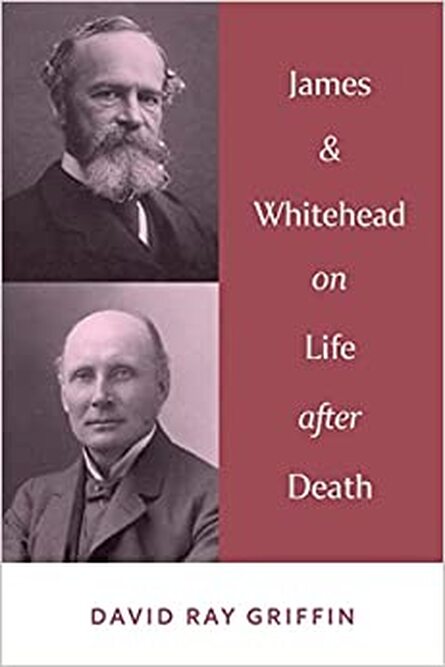
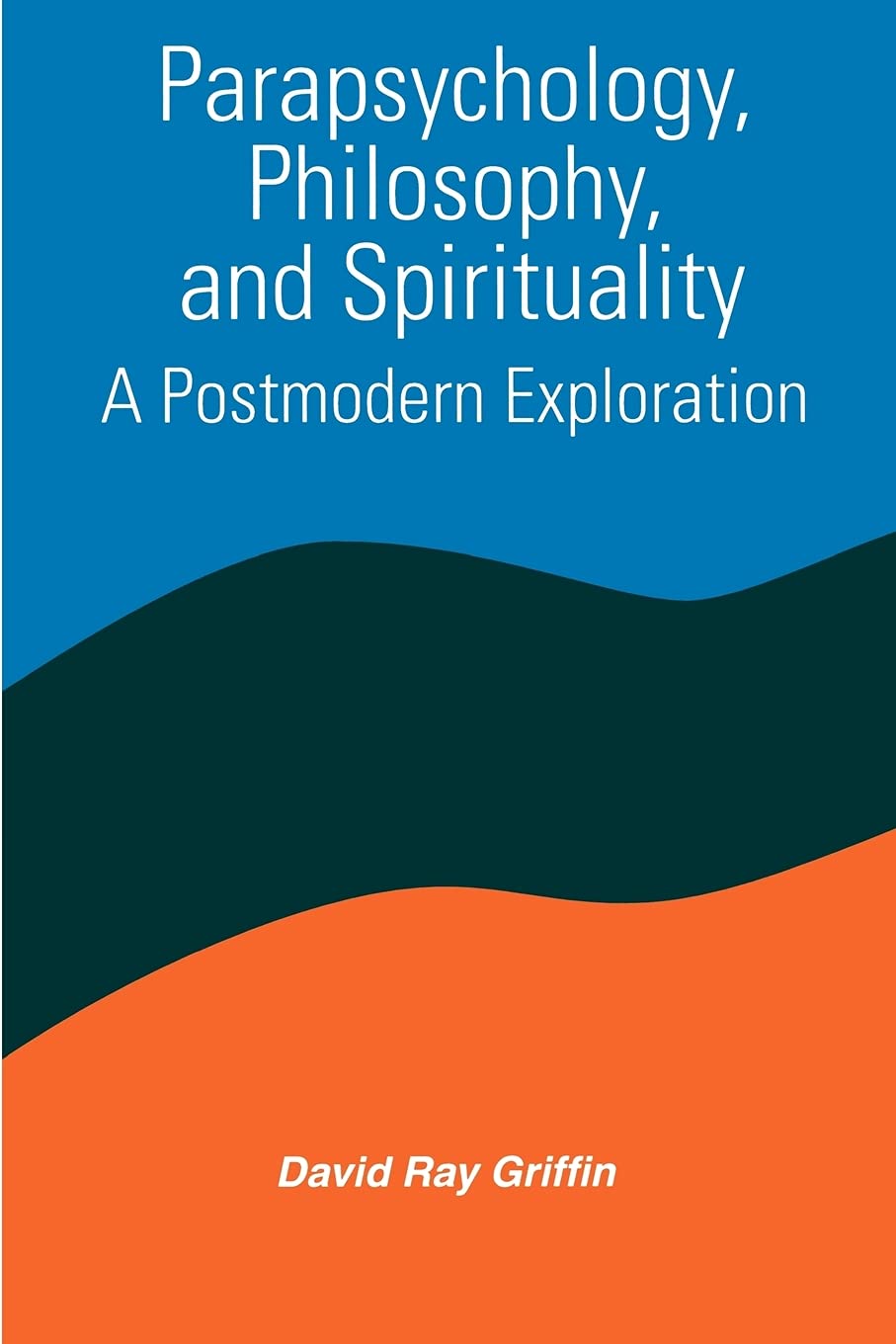
Subjective immortality, on the other hand, is the continuation of the self after the death of the brain, whereby the self undergoes a continuing journey. This journey may or may not be everlasting; it may be "immortal" in the sense of having no end, or it may be "immortal" in a metaphorical sense, as surviving the death of the brain and continuing for a finite duration. David Griffin argues for subjective immortality but does not spell out the particular form it would take, saying that direct and indirect evidence from parapsychology points to its plausibility and perhaps even its probability. Please note that all these kinds of immortality, objective and subjective, may be "true" from a process perspective.

If subjective immortality, or at least a continuation of the self's journey, is a reality, God would be at work in the journey after death no less than in the journey prior to death: as an indwelling lure toward the fulness of life relative to the situation at hand (through initial aims) and as a companion in the journey, sharing in the sufferings and joys. There could be spiritual growth after death: a soul-gentling.

- Jay McDaniel, 6/24/2022


​​Life after Death: A Reflection

by John Cobb

Question:

​Can you explain the Process view of our ‘life after physical death.’ Are our satisfactions resurrected into God and do they grow into what they could be in God’s aim? Will we be able then to grow into God’s aim?

from Process and Faith: October 1999

Dr. Cobb’s Response

The question asked this month is more specific than the general topic of life after physical death. It is about the Consequent Nature of God and what it means that we are taken up into this. “Are our satisfactions resurrected into God and do they grow into what they could be in God’s aim? Will we be able then to grow into God’s aim?”

There is no one answer of process theologians to these questions. There are slight differences between Whitehead and Hartshorne, and those who follow them also have different views. Of course, no one knows.

But even if we can only have visions of what may be rather than of what certainly is, these visions are important. To be persuasive they need to be organically related to the rest of what we believe. If they are to function eschatologically, they must at some level satisfy our need to believe that life and history have meaning, that they add up in some way, that what we are and do is not simply lost forever, and that even when it is painful or seemingly vacuous, it makes some positive contribution.

This is the main point of both Whitehead and Hartshorne. Whitehead thinks it is more coherent to suppose that God has physical feelings of the world than that God only mediates pure possibilities to the world. He also thinks this belief makes contact with some very deep religious intuitions. For if God prehends us, there are good reasons to think that God’s Consequent Nature includes us far more fully and richly than even a successor moment of our own experience includes its predecessors.

There are two dimensions to this difference. First, in every prehension of my immediate past experience, some of it is omitted. Whitehead provides good reason to think that in God’s prehension, nothing, or virtually nothing, is omitted. Second, although the immediate past is felt in human experience with considerable immediacy, that is, its subjectivity functions as such, this fades rapidly. My memories of what occurred even a few minutes ago lack that immediacy. In God, there is no fading of immediacy. Each experience in its full subjective value lives on forever.
Students of Whitehead sometimes miss this emphasis on experiential immediacy in the divine life because this is said to be a doctrine of “objective” immortality. This is set over against “subjective” immortality which means that persons would continue to enjoy new experiences after death.

This distinction is real and important, and although process thought does not exclude the possibility of subjective immortality in this sense, that is not what this question is about. The point here is that the data of God’s physical feelings are our subjective experiences. It is these that live on in God in their full immediacy.

The question, however, asks for something more than this, something at which Whitehead hints. As occasions of experience are resurrected in the divine life, are they changed and do they continue to change? Specifically, do they grow into what they could be in God’s aim?

Marjorie Suchocki has gone further than any other process theologian in exploring this possibility. Her book, The End of Evil, is to be highly recommended for its speculative development of Whitehead’s hints in this direction. Her development of Whitehead’s thought is motivated by her passionate conviction that sheer everlasting perpetuation of miserable experiences is no eschatology!

I have not been able to imagine as much transformation within the divine life as does Suchocki. Nevertheless, it is clear that there is some. A creaturely occasion as felt by God is not simply what that occasion was as an act of creaturely feeling. Whereas it felt itself in a very limited context, it is felt by God in a universal context. In that context it has a meaning and role that it did not have for itself. Further, as the Consequent Nature includes more and more events lying in the future of the one in question, the meaning of the original event changes. Since God’s lures have taken account of the original event, the later events, when responsive to those lures, may have built upon the original event in positive ways upon it. Thus as time goes on the momentary experience in question may become part of the realization of aims of which it was itself unaware, even of aims that did not exist at that time.

The question remains whether this change of role and meaning affects the subjectivity of the occasion. Here my imagination breaks down, and I am disposed to answer negatively. The subjective experience prehended by God remains forever just that experience. An experience here and now may be positively affected by the assurance that God can use it beyond its merits in the larger scheme of things. But just what that use may be lies forever outside the experience.

The added element of assurance that God will do with us more than we can imagine is important. That it probably does not affect the immediacy of our lives in God need not detract from that current value. It can provide the deeper meaning required by eschatological faith.


​For more on life after death in Open Horizons, see:


Five ​Questions People Ask


What is the soul, anyway?

For John Cobb and for other process philosophers influenced by Whitehead, the human soul is part of nature. It is natural not supernatural. Animals have souls, too. The soul is a center of experience in its continuity through time, unfolding moment by moment, including within its momentary unfolding unconscious and conscious dimensions.

When depth psychologists and neurobiologists speak of unconscious forms of experience and activity within the life of a person, process philosophers and theologians agree. Conscious experience is important in the life of a soul, but not the whole of it by any means. Much and perhaps most of our experience is unconscious. One of our tasks is to find ways of reconciling and integrating the conscious and unconscious sides of our lives.

In the lives of human beings and other animals, the soul plays a decisive role in coordinating bodily activities. Consciously and unconsciously, the soul receives influences from the body and initiates responses. The state of a soul can influence the body just as the state of a body can influence the soul; hence the truth of psychosomatic medicine. Our bodies are partly affected by the states of our souls, and our souls are partly affected by the states of our bodies.

Is the soul in the brain?

Cobb and other process philosophers and theologians believe that the soul occupies regions of the brain in such a way that the brain is a constant source of novelty for the soul. The brain is composed of a vast array of "societies" that interact with one another in incredible ways, and the soul is very much shaped by those interactions. But the momentary experience of a soul, at any given moment in its ongoing life, is not reducible to any particular portion of the brain or even to the whole of the brain understood in narrowly molecular terms. It is the lived experience of the person to whom the brain belongs, and this lived experience may include forms of feeling and perception, conscious and unconscious, that are not mediated by the physical brain. If so, the soul is still "natural" in the sense of being part of the larger web of life, but not brain-restricted.

Can the soul survive death?

There is nothing in this understanding that necessitates the view that the soul pre-exists the body or survives bodily death in subjective immortality (see above). The soul may emerge in and with the embryo, not having existed beforehand. And it may perish with the death of a brain, insofar as its experience depends on the brain for nourishment. If this is the case, the soul would have objective immortality in the world and in God, but not subjective immortality.

However, from a process perspective, the pre-existence and survival of the soul after death are metaphysical possibilities. The process cosmology understands the universe as a vast and multi-dimensional web of life, and there is nothing that precludes the pre-existence or survival of souls, human and animal, if empirical evidence points in those directions.

John Cobb's colleague, David Ray Griffin, has done extensive work in exploring evidence for life after death, and concludes that there is much evidence in favor of a continuing journey. For Griffin and for Cobb, it is likely that the soul undergoes a continuing journey after death. See his books below.

What about Heavens and Hells?

It is possible that, in the ongoing life of a soul, there are periods of purgation. "Hells" can be imagined as states of affairs in which a person comes to truly understand and share in the harm and pain the person inflicted upon others, seeking forgiveness. It would be a form of rehabilitation and creative transformation.

"Heavens" can be imagined as states of affairs in which a person grows into the full potential of love, awakening to connections and perhaps being reunited with loved ones. All are possible from a process perspective.

Even heavens are not necessarily permanent. It is possible that the desired end of the journey is for the soul to arrive at a definitive end, after which there is the pilgrimage of the soul as a memory in the ongoing life of God. This would be subjective immortality for a time, or, perhaps better, subjective continuation for a time, until love is fully realized, and death can be natural and holy,

Would God be at work in the life of a soul in life after death?

​God is many things in process thought: an indwelling lure toward wholeness, a course of creative transformation, an eternal companion to each and all. If there is joy and suffering after death, God would share in the joy and suffering; they would 'belong to God' in some way. If there is spiritual growth in life after death, God would be an indwelling lure in the soul for the growth that is possible. From a process perspective, God never gives up on anybody. Yes, there are initial aims after death.


​- Jay McDaniel


​Books by David Ray Griffin exploring
Evidence for Life after Death


John Cobb on the Soul

in a Christian Natural Theology, reposted
with permission of Religion Online


​Whitehead is remarkable among recent philosophers for his insistence that man has, or is, a soul. Furthermore, he is convinced that this doctrine has been of utmost value for Western civilization and that its recent weakening systematically undercuts the understanding of the worth of man. The understanding of the human soul is one of the truly great gifts of Plato and of Christianity, and Whitehead does not hesitate to associate his own doctrine with these sources, especially with Plato.(AI, Ch. II)

Nevertheless, Whitehead’s understanding of the human soul is different from those of Platonism and historic Christianity and is one of his most creative contributions for modern reflection. If we are to understand any aspect of Whitehead’s doctrine of man, we must begin by grasping his thought on this subject.

Perhaps the most striking differentiating feature of Whitehead’s doctrine of the soul is that it is a society rather than an individual actual entity. A moment’s reflection will show that this position follows inevitably from the distinction between individuals and societies explained in the preceding chapter. Individuals exist only momentarily. If we identified the soul with such an individual, there would be millions of souls during the lifetime of a single man.

But when we speak in Platonic or Christian terms, we think of a single soul for a single man. If we hold fast to this usage, and Whitehead basically does so, (MT 224. However, since for Whitehead identity through time is an empirical question, he allows for the possibility of a plurality of souls in a single organism.) then we must think of the soul as that society composed of all the momentary occasions of experience that make up the life history of the man. The soul is not an underlying substance undergoing accidental adventures. It is nothing but the sequence of the experiences that constitute it.
In contrast to some Christian views of the soul, it should also be noted at the outset that Whitehead’s understanding of the soul applies to the higher animals as well as to man. Wherever it is reasonable to posit a single center of experience playing a decisive role in the functioning of the organism as a whole, there it is reasonable to posit a soul. For the soul is nothing but such a center of experience in its continuity through time. The use of the term "soul" carries no connotation in Whitehead of preexistence or of life after death. There is no suggestion that the soul is some kind of supernatural element which in some way marks off man from nature and provides a special point of contact for divine activity. The soul is in every sense a part of nature, subject to the same conditions as all other natural entities. (Although this is Whitehead’s usual terminology in his later writings, in such earlier works as CN and occasionally in his later writings he speaks of nature in a more restricted sense.)


John Cobb on Life after Death

in a Christian Natural Theology, reposted
with permission of Religion Online
One of the questions to which the similarity and difference of animal and human souls is relevant is that of their existence after death. Whitehead dealt with this question only rarely, and then very briefly. The most important passage on the subject can be quoted.

"A belief in purely spiritual beings means, on this metaphysical theory, that there are routes of mentality in respect to which associate material routes are negligible, or entirely absent. At the present moment the orthodox belief is that for all men after death there are such routes, and that for all animals after death there are no such routes.

"Also at present it is generally held that a purely spiritual being is necessarily immortal. The doctrine here developed gives no warrant for such a belief. It is entirely neutral on the question of immortality. . . . There is no reason why such a question should not be decided on more special evidence, religious or otherwise, provided that it is trustworthy. In this lecture we are merely considering evidence with a certain breadth of extension throughout mankind. Until that evidence has yielded its systematic theory, special evidence is indefinitely weakened in its effect."(RM 110-111)

Whitehead never returned to a positive treatment of this question, largely because his own interest focused on quite a different conception of immortality.(Dial 297.) Hence, if we are to discuss this aspect of his doctrine of man, we must lean heavily upon this single fascinating passage. A number of points are clear. First, with reference to the topic of the last section, it seems that Whitehead is doubtful that so sharp a line can be drawn between animals and humans that there is real warrant for affirming total extinction of all animals and survival of all humans. Here again we see the insistent rejection of a priori and absolute distinctions. Second, Whitehead explicitly and forcefully denies that the existence of the soul is any evidence for its survival of bodily death. On the other hand, it is clear that he regards his philosophy as perfectly open to the possibility of immortality and that relevant evidence might in principle be obtained. Third, Whitehead recognizes that our response to evidence of this sort depends upon a wider structure of conviction that either opens us to the likelihood of that which is being affirmed or closes us to it.

The passage quoted is found in Religion in the Making and uses terminology slightly different from that employed in this book which depends on his later writings. In terms of the analysis offered above, we may put the question quite simply: Can the soul exist without the body? Can it have some other locus than the brain and some other function than that of presiding over the organism as a whole? In other words, can there be additional occasions in the living person without the intimate association with the body in which the soul or living person came into existence? To these questions Whitehead answers yes.(Whitehead even speculated as to the existence of other types if intelligences in far-off empty space However, the philosophical possibility that this occurs is no evidence that it in fact occurs. Furthermore, it might occur for some minutes or days or centuries and then cease. Whitehead’s private opinion was probably that it did not occur at all.

Nevertheless, in our day the philosophical assertion of the possibility of life beyond death is sufficiently striking that we will do well to consider the grounds of this openness. Since in faithfulness to Whitehead it cannot be argued that there is such life, I will only try to show why the usual philosophical and commonsense arguments for the impossibility of life after death are removed by his philosophy. These arguments stem both from anthropology and from wider cosmological considerations. They are treated below in that order.

The basic form of the anthropological argument against the possibility of life after death has already been answered in what has gone before. This argument fundamentally is that man is his body, or his body-for-itself, (Sartre) or the functioning of his body, in such a sense that it would be strictly meaningless to speak of life apart from the body. The body-for-itself obviously shares the fortunes of the body in general, and certainly the functioning of the body cannot continue without the body. Others, more correctly (from Whitehead’s point of view) , state that man is a psychophysical organism. Clearly a psychophysical organism cannot survive the death of the physical organism. From this point of view, whatever might survive could not in any case be the man.

Whitehead recognizes that language does commonly refer to the entire psychophysical organism as the man.(AI 263-264.) In this it bears testimony to the extreme intimacy of the interaction between body and soul. However, he himself ordinarily identifies the man with the soul.(PR 141.)It is the soul that is truly personal, the true subject. The body is the immediate environment of the person. Hence, the continued existence of the soul or the living person would genuinely be the continued existence of the life of the man. That there is a soul or living person, ontologically distinct from the body, is the first condition of the possibility of life after death. This distinct existence has been established in Whiteheadian terms in the preceding sections of this chapter.

The secondary anthropological objection against such life Whitehead himself probably found more weighty. This is that we have no experience of souls apart from the most intimate interaction with bodies. It is by bodies that the causal efficacy of the universe is mediated to them, and it is as the controlling forces in bodies that they have their basic functions. But whatever significance Whitehead may have attached to such considerations, he knew they were far from decisive. The soul in each momentary occasion prehends not only its environing brain but also its own past occasions of experience and the experiences of other souls.( Most important of all is the prehension of God, omitted from the text because of my effort here to limit myself to what can be said of man without reference to God. Attention will be devoted to God and to man’s experience of him in Chs. IV to VI. Insofar as White-head himself speculated about the separability of the soul from the body, the relation to God was uppermost in his mind. Note the following passage, Al 267: "How far this soul finds a support for its existence beyond the body is: -- another question. The everlasting nature of God, which in a sense is non-temporal and in another sense is temporal, may establish with the soul a peculiarly intense relationship of mutual immanence. Thus in some important sense the existence of the soul may be freed from its complete dependence on the bodily organization." Whether Whitehead actually had in mind in this passage the kind of life after death of which I am speaking or the kind of immortality in the consequent nature of God that was his usual concern I do not know.) These prehensions are not mediated by the body. Hence there is no evidence that they could not occur apart from the body. The extreme vagueness with which other souls are prehended directly in this life (PR 469. "But of course such immediate objectification [of other living persons] is also reinforced, or weakened, by routes of mediate objectification. Also pure and hybrid prehensions are integrated and thus hopelessly intermixed.") might be replaced by clarity when the mediating influences of the pure physical prehensions are removed. Such speculation makes use of no materials not directly provided by Whitehead. But it affords no evidence that the soul does live beyond death. It simply supports Whitehead’s statement that his philosophy is neutral on this question.

Even if it is accepted that the soul is such that it could exist in separation from the body, we are likely to object that there is no "place" for this existence to occur. The days when heaven could be conceived as up and hell as down are long since past (if ever, indeed, they were present for sophisticated thinkers). In the Newtonian cosmology, disembodied souls seemed thoroughly excluded from the space-time continuum. But souls, or mental substances, fitted so ill in this continuum at best, even in their embodied form, that it did not seem too strange to suppose that beyond the continuum of space and time there might be another sphere to which human souls more naturally belonged. Those who believed that somehow the soul could also be explained in terms of the little particles of matter that scurried about in space and time could not believe in any such other sphere. But for those who were convinced that mind could never be explained in terms of the motions of matter, the duality of matter and mind pointed quite naturally to the duality of this world and another, spiritual world in which space, time, and matter did not occur. Gradually, however, the sharp line that separated matter and mind gave way. Evolutionary categories brought mind into the natural world, involving it in space and time. Even if this forced the beginning of the abandonment of the pure materiality of the natural world, it also undermined the justification for conceiving of any sphere beyond this one. If minds have emerged in space and time, it is to space and time that they belong. A nonspatiotemporal mental sphere seemed no more meaningful or plausible than a nonspatiotemporal material sphere. There seemed no longer to be any "place" for life to occur after death.

Theology responded to this new situation by reviving the ancient doctrine of the resurrection of the body. If heaven could not be another sphere alongside this one, then it must be a transformation of the spatiotemporal sphere which will come at the end of time. The Pharisees, it appeared, had more truth than the Orphics. But the belief in an apocalyptic end was hard to revive, and even among the theologians who used its language, there were many who regarded the resurrection of the body more as a symbol of the wholeness of the human person, body and mind, than as a reliable prediction of the future. Outside of conservative ecclesiastical circles, the doctrine of the resurrection of the body continued to appear anachronistic. Natural theology, at any rate, could not be asked to attempt to make any sense of such a theory.

But in our situation, in which the mind or soul has been naturalized into the spatiotemporal continuum, can natural theology suggest any "place" for any kind of life after death? I am not sure that in any positive sense it can, and I am sure that I am not capable of the kind of imaginative speculation that would be required to give such a positive answer. Yet something may be said in a purely suggestive way to indicate that our commonsense inability to allow "place" for the new existence of souls is based on the limitations of our imagination and not on any knowledge we posssess about space and time. We will turn to Whitehead for the beginning of the restructuring of our imagination, on the basis of which further reflection must proceed.

The first point that must be grasped and held firmly is that we are not to think of four-dimensional space-time as a fixed reality into which all entities are placed. Space-time is a structure abstracted from the extensive relationships of actual entities. So far as what is involved in being an actual entity is concerned, there is no reason that there should be four dimensions rather than more or fewer. The world we know is four-dimensional, but this does not mean that all entities in the past and future have had or will have just this many dimensions. Indeed, it does not mean that all entities contemporary with us must have this number of dimensions, although there may be no way for us to gain cognition of any entity of a radically different sort.

Our four-dimensional space-time is the special form that the universal extensive continuum takes in our world. Every actual entity participates in this extensive continuum. But even this is not because the extensive continuum exists prior to and is determinative of the occurrence of actual entities. The extensive continuum is necessary and universal only because no actual entity can ever occur except in relation to other actual entities. Such relations may not be such as to allow for measurement, as they do in our four-dimensional world; certainly they may not have the dimensional character with which we are familiar. But some kind of extensiveness, Whitehead believes, is a function of relatedness as such.

If we try to imagine what it would be like to have no intimate relations with a body or with an external world as given to us in our sense experience, we seem to be left with a two-dimensional world. There is the dimension of successiveness, of past and future. We have memory of the past and anticipation of the future. In addition, there remains the direct experience of other living persons in mental telepathy. These persons are not experienced as related to us in a three-dimensional space but only as being external to ourselves, capable of independent, contemporary existence. Shall we call this a one-dimensional spatial relation?

Let us suppose, then, that the life of souls beyond death occurs in a two-dimensional continuum instead of the four-dimensional continuum we now know. Is it meaningful to ask" where" this two-dimensional continuum exists? Such a question can only mean, How is it related to our four-dimensional continuum according to the terms of that four-dimensional continuum? And perhaps, in those terms, no answer is possible. However, if there are relations between events in a two-dimensional continuum and events in a four-dimensional continuum, then those relations too must participate in some extensive character. Perhaps, therefore, in some mysterious sense, there is an answer, but I for one am unable to think in such terms.

For the speculations I have just outlined, I can claim no direct support from Whitehead. He does make clear that the relation of an occasion to the mental pole of other occasions does not participate in the limitations that I take to be decisive for our understanding of a three-dimensional space. (SMW 216; PR 165, 469; AI 318.) He does affirm that even now there may be occasions of experience participating in an order wholly different from the one we know. (MT 78, 212. Whitehead anticipates the gradual emergence of a new cosmic epoch in which the physical will play a lesser role and the mental a larger one. [RM 160; ESP 90.]) He repeatedly emphasizes the contingency of the special kind of space-time to which we are accustomed.(SMW 232; PR 140, 442.) But beyond this the speculation is my own.

Even if my speculations are fully warranted by Whitehead’s understanding of the extensive continuum, it should be clearly understood that these considerations argue only for the possibility of life after death, not at all for its actuality. There is nothing about the nature of the soul or of the cosmos that demands the continued existence of the living person. If man continues to exist beyond death, it can be only as a new gift of life, and whether such a gift is given is beyond the province of natural theology to inquire.